
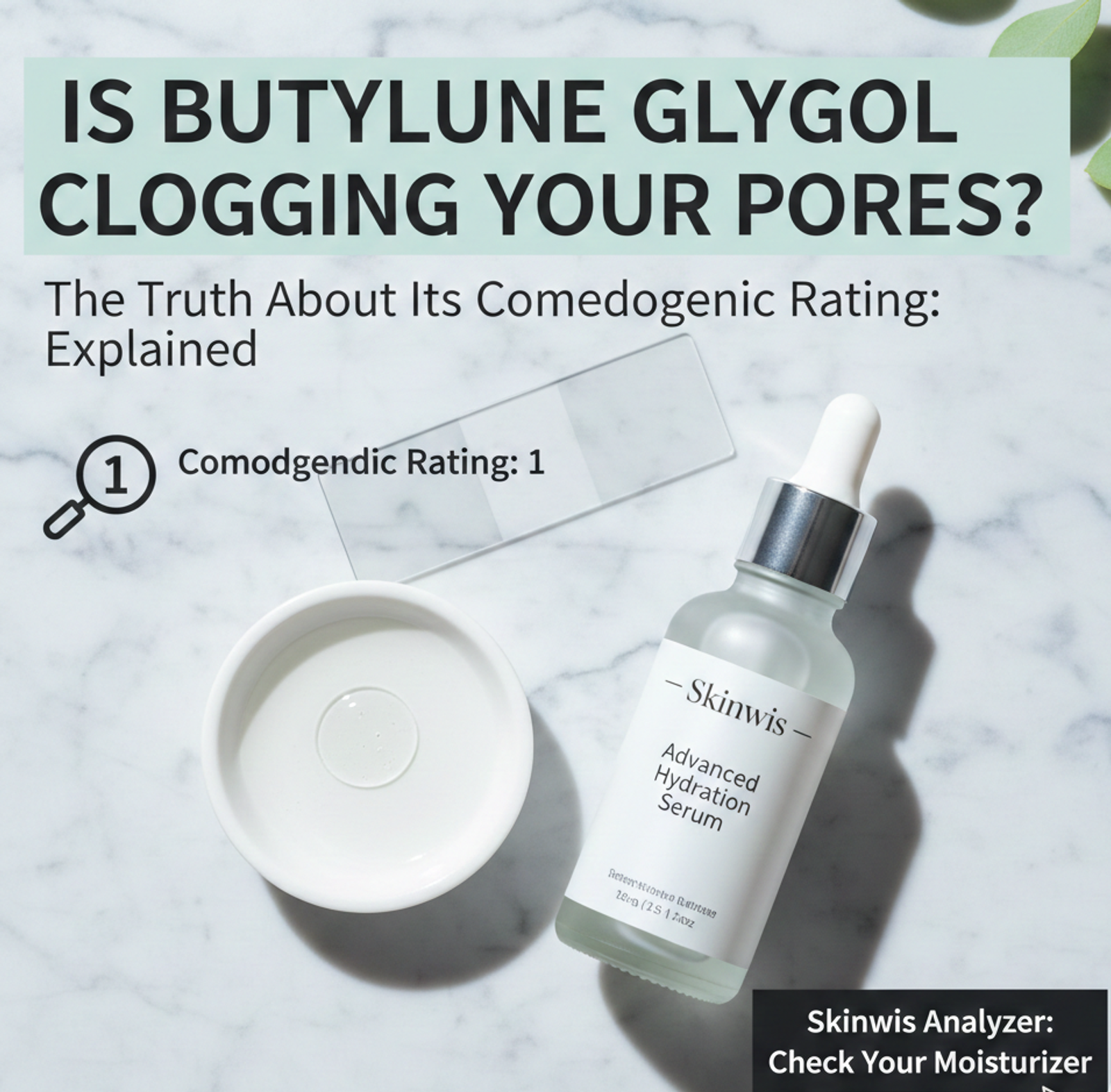
Is Butylene Glycol Clogging Your Pores? The Truth About Its Comedogenic Rating
If you’ve ever turned over a skincare bottle, chances are you’ve seen butylene glycol near the top of the list. It is one of the most common "workhorse" ingredients in the industry, yet it’s often met with a raised eyebrow from those of us prone to breakouts.
Does it cause acne? Is the butylene glycol comedogenic rating something you need to worry about? Let’s dive into the science and settle the debate.
What is Butylene Glycol?
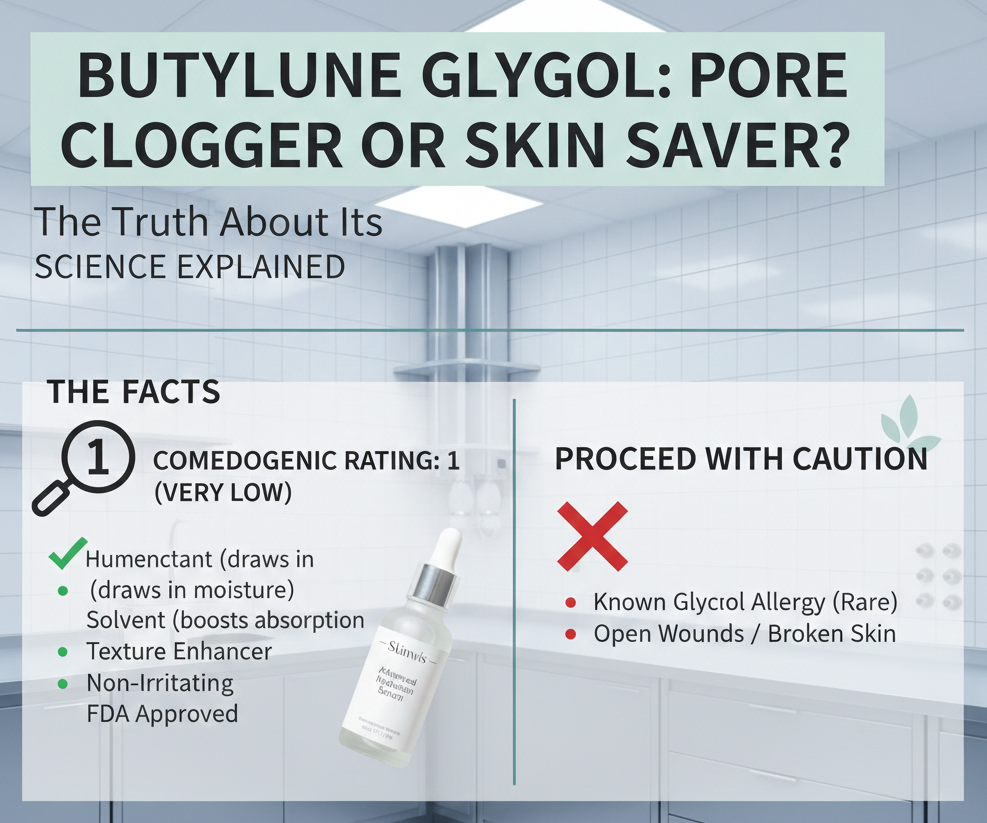
Butylene glycol is a multitasking organic alcohol used as a solvent, thinner, and humectant. In simpler terms, it does three big jobs:
Is Butylene Glycol Comedogenic?
The short answer: No.
In the world of skincare science, the comedogenic scale ranges from 0 (won't clog pores) to 5 (highly likely to clog pores).
The Verdict: Butylene glycol has a comedogenic rating of 1.
A rating of 1 is considered very low. It is widely recognized as non-comedogenic, meaning it is unlikely to cause blackheads or whiteheads for the vast majority of users. Even for those with oily or acne-prone skin, it is generally considered a "safe" texture enhancer.
Side Effects & Safety: Is It "Toxic"?
Despite some "clean beauty" myths, butylene glycol is not a toxin. It is fundamentally different from its cousin, propylene glycol, which is more likely to cause irritation.
Who Should Avoid It?
While it’s a gold-medal ingredient for most, you might want to skip it if:
Common Products Containing Butylene Glycol
Because it makes formulas feel so elegant, you'll find it in:
The Skinwis Verdict
Butylene glycol is a "green light" ingredient. It isn't a filler; it’s a functional component that ensures your expensive serums actually absorb into your skin rather than just sitting on top of it. With a comedogenic rating of 1, it’s a safe bet for almost every skin type.
Want to see if your current routine is safe? Visit our deep-dive Butylene Glycol ingredient page to see a full breakdown of its benefits, or use the Skinwis Analyzer .