
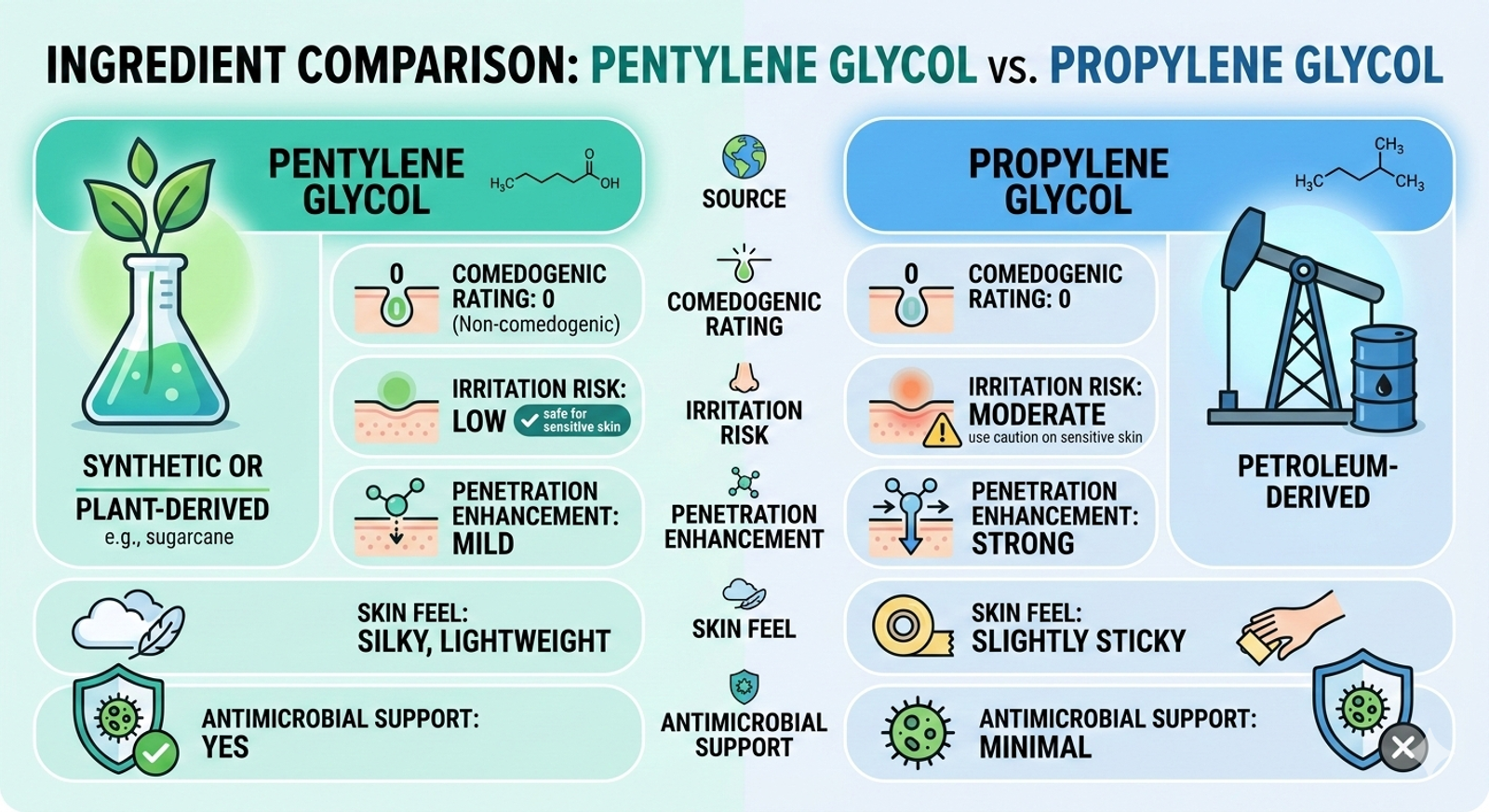
Pentylene Glycol vs Propylene Glycol: Ingredients, Comedogenicity, Irritation & Skincare Impact
If you’ve ever scanned an ingredient list and spotted pentylene glycol or propylene glycol, you’re not alone. These two glycols are common in skincare — and often misunderstood.
While their names look similar, their skin feel, safety profile, and overall function can differ in meaningful ways. Let’s break it down clearly and practically.
What Are Glycols in Skincare?
Glycols are alcohol-based compounds primarily used as:
Both pentylene glycol and propylene glycol serve these roles — but with some key differences.
Pentylene Glycol
What It Is?
Pentylene glycol is a synthetic or naturally derived (often from sugar cane) humectant and solvent.
Main Functions
Comedogenicity
Pentylene glycol is lightweight and does not leave a heavy residue, making it suitable for congestion-prone skin types.
Irritation Potential
Because of its gentler profile, it’s often preferred in “sensitive skin” or “clean beauty” formulations.
Skin Feel
Propylene Glycol
What It Is?
Propylene glycol is a petroleum-derived synthetic humectant and solvent that has been widely used in cosmetics and pharmaceuticals for decades.
Main Functions
Comedogenicity
However, because it enhances penetration, it can sometimes increase the likelihood of irritation from strong actives in acne treatments.
Irritation Potential
Propylene glycol is one of the more commonly reported cosmetic irritants — not because it’s unsafe, but because it increases penetration and can amplify reactions.
Skin Feel
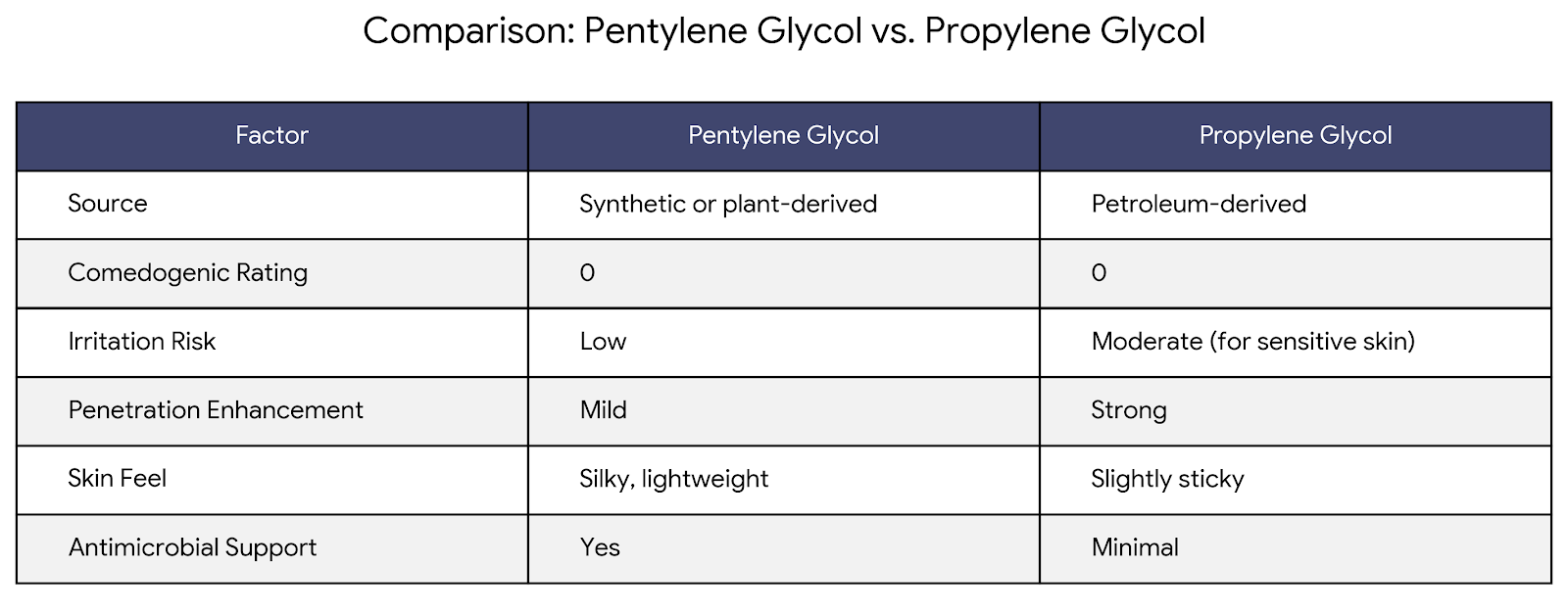
Key Differences at a Glance
Barrier Health & Sensitivity
If you have:
Pentylene glycol is generally the safer option.
Propylene glycol can disrupt compromised skin more easily due to its strong penetration-enhancing properties.
Acne-Prone Skin Considerations
Neither ingredient is comedogenic. However:
For inflamed acne, gentler formulations often perform better long-term.
Are They Safe?
Both ingredients are considered safe for cosmetic use and are widely approved by regulatory bodies worldwide. Safety concerns online usually stem from misunderstanding “glycol” as being similar to antifreeze (ethylene glycol), which is a completely different and toxic compound.
Propylene glycol is also used in food and pharmaceutical applications, further supporting its safety at regulated concentrations.
Which One Is Better?
It depends on your skin type and product goals.
Choose Pentylene Glycol if:
Choose Propylene Glycol if:
Final Verdict
Pentylene glycol and propylene glycol are both non-comedogenic, functional, and widely used skincare ingredients. The main difference lies in irritation potential and penetration strength.
If your skin barrier is healthy, both can work beautifully. If you lean sensitive, pentylene glycol often wins. For more details checkout our Skinwis Analyzer.