
How to Layer Skincare:
Retinol, Vitamin C & Acids
An effective routine is more than a list of products—it is a strategic sequence designed to maximize absorption while preserving the Acid Mantle.
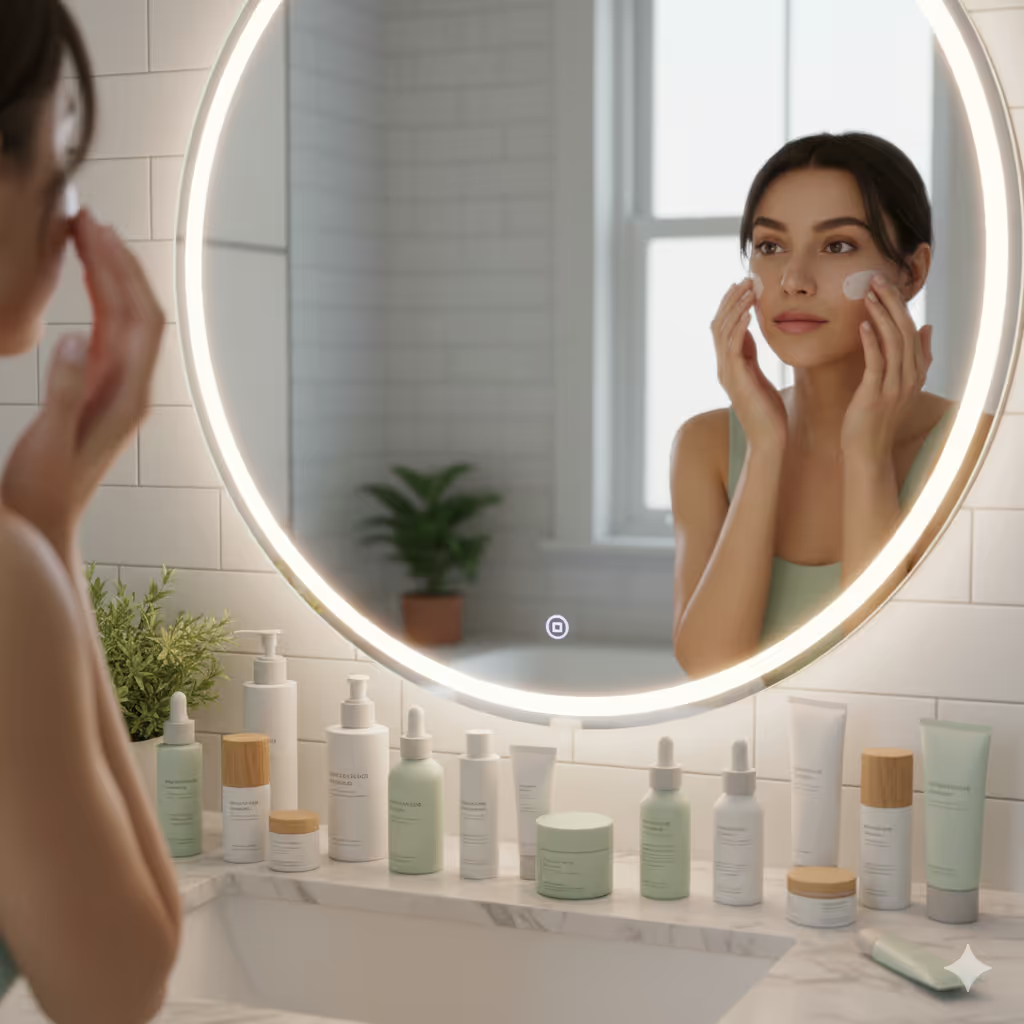
The Hierarchy of Application
Cleanse
The foundation. Use a pH-balanced surfactant (5.5) to remove debris without disrupting the lipid barrier. Avoid 'squeaky clean' sensations.
Active Serums
This is where pH-sensitive molecules (Vitamin C, Retinoids, Acids) live. Apply to clean skin to ensure direct pathway to the epidermis.
Hydration & Repair
Water-based humectants (Hyaluronic Acid, Panthenol) draw moisture in, while peptides support collagen synthesis.
Seal & Protect
Occlusive moisturizers trap previous layers. In the AM, this must be followed by SPF 30+ to prevent UV degradation of actives.
The 4-Night Clinical Cycle
Strategically preventing over-exfoliation and chronic inflammation.
Night 1
Exfoliate
Chemical acid (AHA/BHA) to prep surface.
Night 2
Retinoid
Tretinoin or Retinol for cell turnover.
Night 3
Recovery
Barrier repair, Ceramides, no actives.
Night 4
Recovery
Deep hydration and lipid replenishment.
AM: Protection
-
Antioxidant Defense: Vitamin C (L-AA) to neutralize free radicals from pollution.
-
SPF Non-Negotiable: Actives like retinoids make skin more photosensitive.
PM: Correction
-
Double Cleanse: Use an oil cleanser first to dissolve stubborn SPF and sebum.
-
Repair Actives: Night is the peak time for DNA repair and cellular mitosis.
Layering Conflicts
Retinoids + Benzoyl Peroxide
BP can oxidize certain retinoids (like Tretinoin), rendering them inactive.
Vitamin C + Copper Peptides
The copper can degrade L-Ascorbic Acid, causing oxidation.
"For sensitive skin starting Retinoids: Apply a thin layer of moisturizer, then your active, then another layer of moisturizer. This slows penetration without blocking efficacy."