
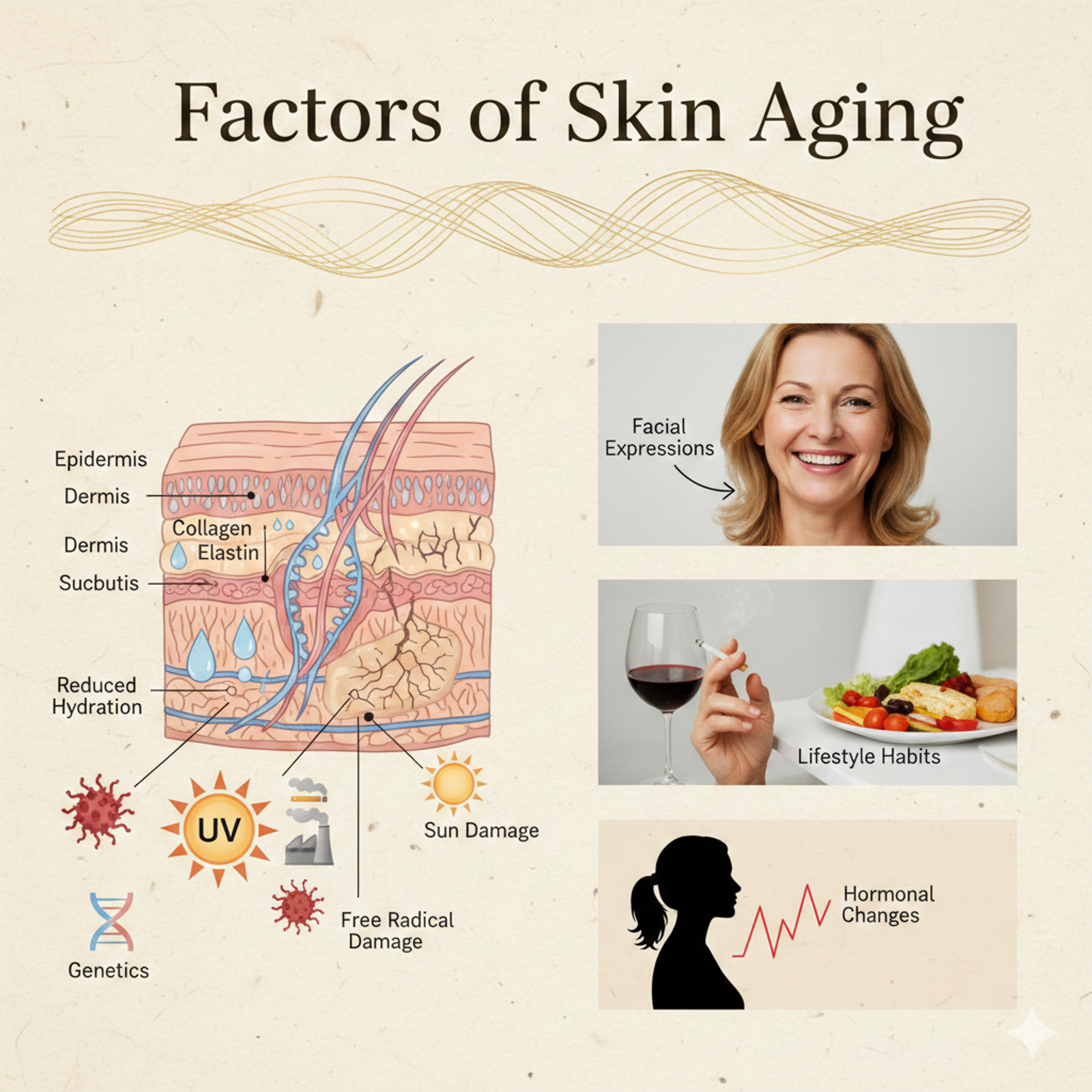
The Internal Mechanics: What Happens Naturally
Even in a perfect environment, our bodies undergo "intrinsic" aging. These factors are largely determined by our internal clock.
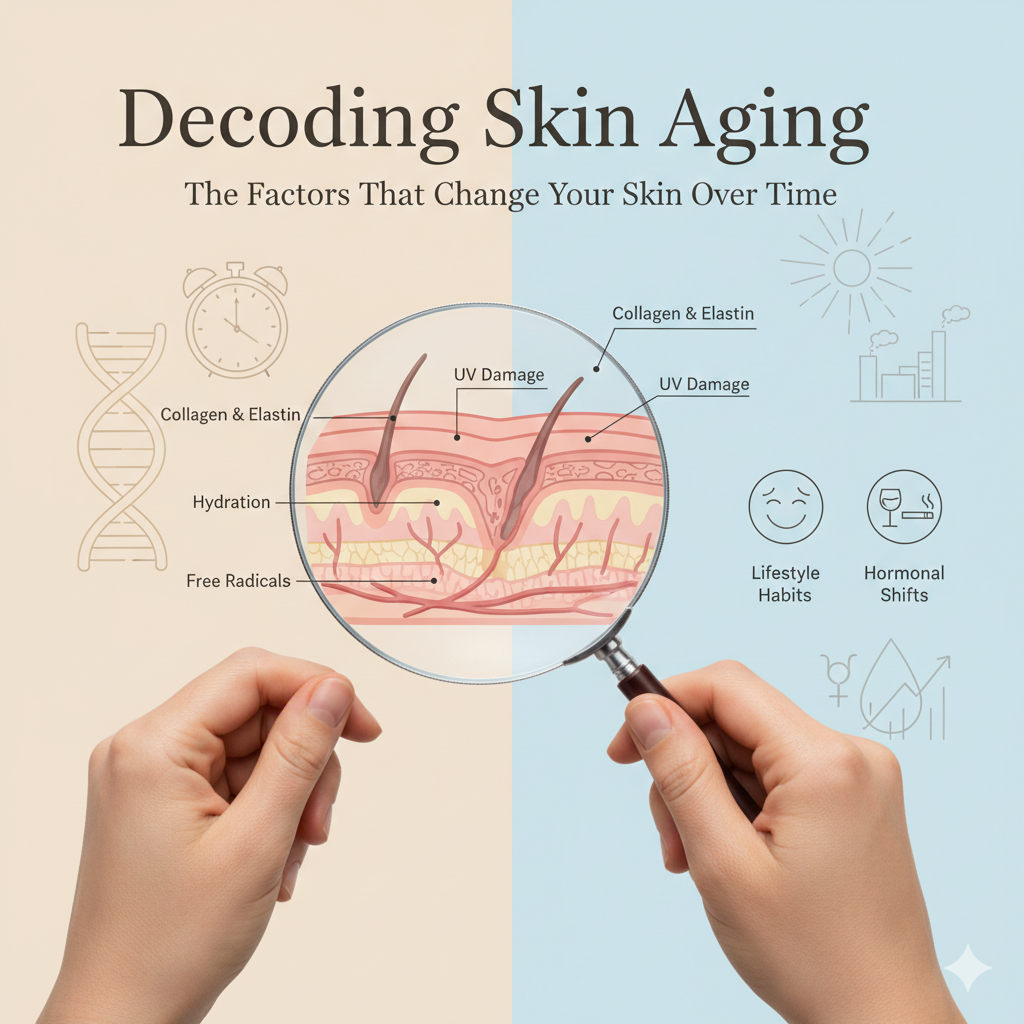
The External Culprits: Environmental Impact
"Extrinsic" aging is caused by external stressors. The good news? This is the area where we have the most control.
☀️ Sun Damage (Photoaging)
UV exposure is the #1 external cause of aging. Ultraviolet radiation doesn't just cause a tan; it actively dismantles collagen fibers and damages skin DNA. This leads to deep wrinkles, "leathery" texture, and dark spots.
🧪 Free Radical Damage
Free radicals are unstable molecules triggered by pollution, smoking, and UV rays. They create "oxidative stress," which acts like rust on a car, breaking down healthy skin cells and accelerating the aging process.
🚬 Lifestyle Habits
What we put into our bodies shows up on our faces. Smoking restricts blood flow, while excessive alcohol and poor nutrition deprive the skin of the vital nutrients it needs to repair itself.
Movement and Expression
It’s ironic that the things that make us human—like smiling, laughing, or even squinting in the sun—contribute to aging. Repetitive facial movements eventually create "dynamic" wrinkles. Over time, as collagen decreases, these lines become permanent "static" wrinkles that remain even when your face is at rest.
The Takeaway
While we can't stop the clock, we can certainly influence how our skin responds to it. By focusing on sun protection, antioxidant-rich products, and healthy lifestyle choices, you can support your skin's resilience at any age.