
Role of Steartrimonium Bromide Ingredient in Skincare
Steartrimonium Bromide is a specialized ingredient increasingly found in modern personal care formulations. While traditionally recognized for its exceptional performance in hair care, its specific functional properties have led to its adoption in select skincare products. For consumers seeking to understand the components of their daily routines, evaluating this ingredient provides clarity on how modern cosmetic formulations achieve stability and specific sensory outcomes.
This ingredient deep dive provides an objective, evidence-based analysis of Steartrimonium Bromide in skincare. It covers its chemical classification, mechanical actions, formulation benefits, skin type suitability, and regulatory safety profile. By examining the peer-reviewed data, readers will gain a clear understanding of how this compound works on the skin surface and how to identify it on product labels.
What Does Steartrimonium Bromide Mean?
Steartrimonium Bromide is the standardized International Nomenclature Cosmetic Ingredient (INCI) name for a specific quaternary ammonium compound. In the cosmetics industry, it is classified as a cationic surfactant, which means it carries a permanent positive electrical charge.
The name itself reflects its chemical architecture. The "stear" prefix denotes a long-chain fatty acid derivative consisting of 18 carbon atoms, known as a stearyl group. The "trimonium" portion indicates three methyl groups attached to a central nitrogen atom. The "bromide" part refers to the bromide ion that acts as the counter-ion to balance the chemical structure.
In industrial manufacturing, Steartrimonium Bromide is produced synthetically. The process typically involves the alkylation of stearyl dimethylamine with methyl bromide. This chemical reaction creates a highly pure, stable crystalline powder or liquid solution that cosmetic chemists can easily incorporate into water-based systems.
Formulators select Steartrimonium Bromide for cosmetic products primarily because of its versatile surface-active properties. Unlike anionic surfactants, which are commonly used for heavy cleansing and creating foam, cationic surfactants like Steartrimonium Bromide are selected for their affinity to organic surfaces. This makes them highly effective conditioning agents in skincare and hair care products.
Role of Steartrimonium Bromide in Skincare
The utilization of Steartrimonium Bromide in skincare is driven by its multi-functional nature. While it is rarely the primary active ingredient designed to alter skin physiology, it plays an indispensable supporting role that ensures a product performs optimally during application.
Conditioning Properties
The primary function of Steartrimonium Bromide is to act as an efficient conditioning agent. When applied to the skin, it forms a microscopic, breathable film that helps reduce moisture loss. This film-forming capability helps smooth the outermost layer of the skin, known as the stratum corneum, temporarily improving the look and feel of dry or rough patches.
Emulsifying Support
Skincare formulations typically contain both water and oil ingredients, which naturally separate. To prevent this separation, formulators use emulsifiers. Steartrimonium Bromide assists in the stabilization of oil-in-water emulsions. By reducing the surface tension between the oil droplets and the water phase, it ensures that the product remains uniform over its shelf life.
Texture Enhancement and Product Stability
A product that separates or feels gritty is unusable for consumers. Steartrimonium Bromide enhances the structural matrix of creams and lotions. It ensures a uniform distribution of ingredients, preventing sedimentation and maintaining structural integrity under varying storage temperatures.
Skin Feel Improvement
The sensory experience of a skincare product influences consumer compliance. Steartrimonium Bromide imparts a characteristic silkiness to topical formulations. It reduces the greasy or tacky feel often associated with heavy plant oils or synthetic emollients, allowing creams to glide effortlessly across the skin during application.
Common Product Applications
Given these diverse attributes, Steartrimonium Bromide is commonly formulated into several product categories. It is frequently found in:
How Steartrimonium Bromide Works
Understanding how Steartrimonium Bromide alters skin feel requires a look at its molecular behavior. The molecule is amphiphilic, meaning it possesses both a hydrophilic (water-loving) head group and a lipophilic (fat-loving) tail.
The permanent positive charge is concentrated on the nitrogen atom of the hydrophilic head. Human skin naturally carries a net negative electrical charge at its physiological pH, which typically ranges from 4.5 to 5.5. This negative charge is particularly pronounced on damaged, dry, or weathered skin surfaces.
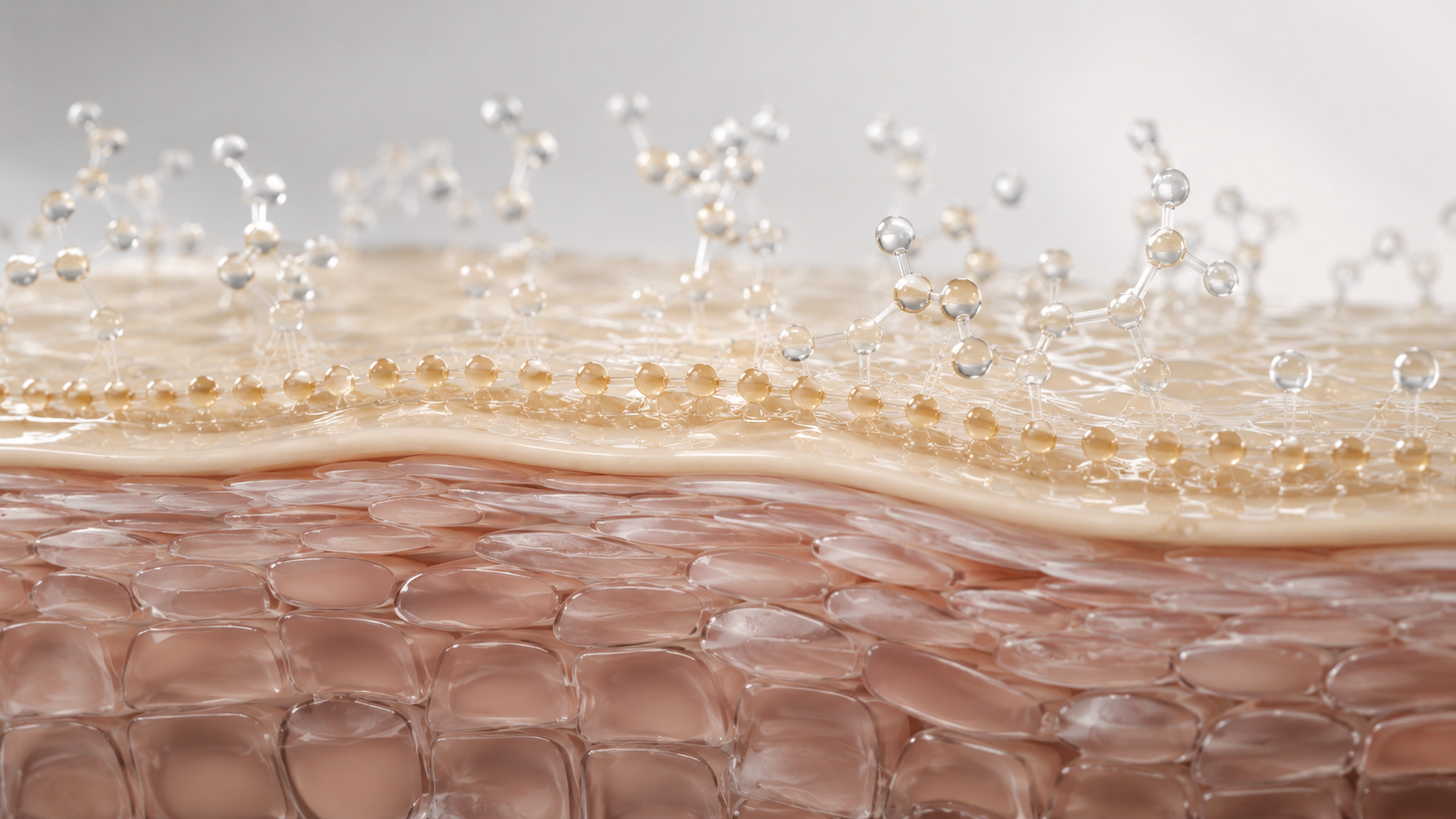
When a product containing Steartrimonium Bromide is applied to the skin, an electrostatic attraction occurs. The positively charged head of the molecule is drawn directly to the negatively charged sites on the skin surface. This process is known as substantive binding. The molecule clings to the skin even during rinse-off applications.
Once attached, the long 18-carbon lipophilic tails point outward from the skin surface. These lipid chains form an organized, microscopic barrier. This aligned structure reduces friction between the skin cells and external objects, including the user's fingers.
The physical reduction in surface friction is what the brain interprets as softness and smoothness. Furthermore, this oriented lipid layer helps seal in moisture by slowing down transepidermal water loss, the process where water evaporates from the skin into the atmosphere.
Benefits of Steartrimonium Bromide in Cosmetic Formulations
The inclusion of Steartrimonium Bromide provides several distinct technical advantages that improve the overall performance of a cosmetic product. These benefits can be divided into sensory, formulation, and consumer advantages.
From a performance perspective, the ingredient allows for the creation of lightweight products that deliver deep conditioning. Formulators can reduce the percentage of heavy waxes while maintaining excellent skin-softening properties. This is highly beneficial when developing non-comedogenic formulas that must not clog pores.
Sensorily, Steartrimonium Bromide provides an immediate smoothing effect. This makes it a popular inclusion in pre-makeup primers and instant-blurring skin treatments. The ingredient helps the product fill in minor micro-relief variations on the skin, creating a more uniform canvas for subsequent cosmetic applications.
For the formulation itself, the ingredient is highly stable across a wide pH range. This stability gives cosmetic chemists greater flexibility when combining it with acidic or basic active ingredients. It also resists oxidation, ensuring that the cream does not change color or develop an unpleasant odor over time.
However, consumers should maintain realistic expectations. The benefits of Steartrimonium Bromide are primarily cosmetic and structural. It does not repair the deeper layers of the skin matrix or stimulate collagen production. Its primary role is to optimize the surface environment and ensure the delivery vehicle functions flawlessly.
Safety and Side Effects
Independent scientific bodies have thoroughly evaluated the safety profile of Steartrimonium Bromide in cosmetic applications. The Cosmetic Ingredient Review Expert Panel, which is an independent group of scientific and medical experts, regularly reviews quaternary ammonium compounds used in cosmetics.
The data indicates that Steartrimonium Bromide is safe for use in cosmetics when formulated within specific concentration guidelines. In leave-on skincare products, its concentration is typically kept low, often below 1% of the total formulation. In rinse-off products, such as cleansers, the concentration can safely be slightly higher.
Like many cationic surfactants, Steartrimonium Bromide can cause skin or eye irritation if used in excessive concentrations or in poorly optimized formulas. The positive charge that allows it to bind to the skin can disrupt cellular membranes if the molecule penetrates too deeply. Therefore, proper formulation techniques are necessary to ensure the ingredient remains on the skin surface where it belongs.
Sensitivity considerations are generally low for the vast majority of populations when the ingredient is used as intended. It is not classified as a potent sensitizer, meaning it is unlikely to induce an allergic reaction or trigger contact dermatitis in healthy skin.
Regulatory authorities worldwide, including the European Medicines Agency and the UK Cosmetics Regulation, permit the use of Steartrimonium Bromide. It is listed on cosmetic inventories globally, provided that maximum concentration limits are respected by manufacturers to ensure public safety.
Key Takeaway: Safety Profile Steartrimonium Bromidede is recognized as a safe and effective cosmetic ingredient by global regulatory bodies. When formulated at standard commercial concentrations, typically under 1% for leave-on products, it poses a very low risk of adverse skin reactions or systemic toxicity.
Is Steartrimonium Bromide Suitable for Different Skin Types?
An ingredient's efficacy is dependent on the specific skin type to which it is applied. Because Steartrimonium Bromide acts primarily on the surface, its suitability varies depending on individual skin characteristics.
Dry Skin
Individuals with dry skin stand to benefit significantly from products containing Steartrimonium Bromide. Dry skin lacks sufficient surface lipids, which leads to a rough texture and flaking. The substantive lipid film formed by this ingredient helps mimic the missing natural lipids, smoothing down loose flakes and locking in vital hydration.
Oily Skin
For those with oily skin, Steartrimonium Bromide is generally well-tolerated but may not always be necessary. Because oily skin already possesses an abundance of sebum, heavy conditioning agents can sometimes feel excessive. However, in lightweight lotions or gel-cleansers, it can provide smoothness without adding heavy, pore-clogging oils.
Combination Skin
Combination skin requires a delicate balance. Products containing Steartrimonium Bromide can be used successfully here, especially if applied to drier zones like the cheeks. The ingredient helps smooth dry patches without exacerbating sebum production in the oilier T-zone, provided the base formula is non-comedogenic.
Sensitive Skin
Sensitive skin types require a cautious approach. While Steartrimonium Bromide is not a common allergen, any surfactant has the potential to cause minor irritation if the skin barrier is already compromised. Individuals with eczema, rosacea, or severe skin barrier damage should monitor how their skin responds to products containing this ingredient.
Factors influencing tolerance include the overall product matrix. A well-designed formula containing soothing agents like allantoin or centella asiatica will mitigate any potential drying or irritating effects of the surfactant, making it entirely suitable for daily use.
Steartrimonium Bromide Compared with Similar Ingredients
To understand where Steartrimonium Bromide fits in a formulation strategy, it is helpful to compare it to other conditioning agents and quaternary ammonium compounds commonly used in the industry.
Behentrimonium Chloride
Behentrimonium Chloride features a longer carbon chain, possessing 22 carbon atoms compared to the 18 found in Steartrimonium Bromide. This longer chain length makes Behentrimonium Chloride slightly more substantive and heavily conditioning. While Behentrimonium Chloride is favored for dense hair masks, Steartrimonium Bromide is often preferred in skincare because it creates a lighter, less occlusive film on the skin surface.
Cetrimonium Chloride
Cetrimonium Chloride has a shorter 16-carbon chain. It provides excellent anti-static properties and is highly water-soluble. However, it is generally considered to have a slightly higher irritation potential than Steartrimonium Bromide when left on the skin. Formulators often choose Steartrimonium Bromide for leave-on skincare creams because it balances conditioning performance with a favorable skin compatibility profile.
Stearamidopropyl Dimethylamine
Unlike Steartrimonium Bromide, which carries a permanent positive charge, Stearamidopropyl Dimethylamine is an amidoamine that requires an acid to become cationic. It is highly biodegradable and functions well as a secondary emulsifier. Steartrimonium Bromide, however, provides a more reliable electrostatic bond to the skin across a broader pH spectrum, as its positive charge does not depend on the acidity of the final product.
Practical Guidance for Consumers
Navigating the ingredient list on the back of cosmetic packaging can be challenging. For individuals seeking to identify and evaluate Steartrimonium Bromide in their routines, practical steps can simplify the process.
To locate this ingredient, scan the ingredient declaration for its precise INCI designation: Steartrimonium Bromide. It may occasionally appear toward the middle or bottom of the list, indicating it is used in a targeted concentration designed for stabilization and surface conditioning.
Consumers are most likely to encounter this ingredient in rich anti-ageing creams, barrier repair lotions, and peeling gels. In peeling gels, the interaction between the cationic Steartrimonium Bromide and anionic polymers creates visible clumps when rubbed on the skin, which helps physically sweep away loose epidermal debris.
When selecting products, consider the product format. If you have an intact skin barrier and are looking for enhanced product slip and an immediate softening effect, selecting a cream with this ingredient is an excellent choice. If you are assessing complex formulas on an [INTERNAL LINK: ingredient page], verifying the presence of cationic conditioners can explain why a product leaves a smooth residue after rinsing.
Recommendations
For consumers navigating the vast array of options on a [INTERNAL LINK: product page], the following evidence-based recommendations can guide purchasing decisions.
For Beginners Learning About Ingredients
If you are new to analyzing formulation data, do not be alarmed by the complex chemical name. Steartrimonium Bromide is a functional stabilizer and texture enhancer, not a harsh chemical to fear. It ensures your cream applies smoothly and remains stable in your bathroom vanity.
For Sensitive Skin Users
If you have a history of reactive skin, look for products where Steartrimonium Bromide is positioned near the bottom of the ingredient list. Alternatively, consult a [INTERNAL LINK: comparison page] to evaluate if a product utilizing non-ionic emulsifiers might be more compatible with an inflamed skin barrier. Always perform a patch test on your inner forearm for 48 hours before applying any new formula to your face.
For Consumers Evaluating Formulations
Look at the complete ingredient context. The presence of Steartrimonium Bromide is highly beneficial in products that contain volatile silicones or lightweight esters, as it helps retain those components on the skin surface longer, maximizing their protective, smoothing effects throughout the day.
Products Commonly Containing Steartrimonium Bromide
FAQ
What is Steartrimonium Bromide used for in skincare?
Steartrimonium Bromide functions primarily as a skin conditioning agent, emulsifier support, and texture enhancer. It helps stabilize oil-and-water mixtures while providing a silky, non-greasy feel and smoothing the skin surface through electrostatic attraction.
Is Steartrimonium Bromide safe?
Yes, international cosmetic safety panels and regulatory agencies consider Steartrimonium Bromide safe for cosmetic use. It is typically used in low concentrations, often below 1% in leave-on products, which minimizes any risk of systemic toxicity.
Can Steartrimonium Bromide irritate skin?
It can cause minor skin irritation if used at excessive concentrations or in isolation. However, in properly balanced commercial skincare products, it is combined with emollients and soothing agents that prevent skin irritation from occurring.
Is Steartrimonium Bromide suitable for sensitive skin?
It can be suitable for sensitive skin when formulated at low percentages in gentle product bases. However, because it is a cationic surfactant, individuals with a severely compromised skin barrier should approach it cautiously and patch-test the product first.
Is Steartrimonium Bromide natural or synthetic?
Steartrimonium Bromide is a synthetic ingredient. It is manufactured through chemical synthesis to ensure high purity, consistency, and stability, which allows it to perform reliably within cosmetic emulsions.
Which skincare products contain Steartrimonium Bromide?
It is commonly found in moisturizing facial creams, body lotions, rinse-off cleansers, shaving creams, and specific exfoliating peeling gels that rely on its structural properties to assist in skin smoothing.
How does Steartrimonium Bromide differ from other conditioning agents?
It differs by carrying a permanent positive charge that specifically binds to the naturally negative charge of human skin. This allows it to provide longer-lasting surface smoothness compared to standard non-ionic emollients or plant oils.
Should consumers avoid Steartrimonium Bromide?
There is no scientific reason for the general public to avoid Steartrimonium Bromide. It serves a valuable functional purpose in stabilizing products and optimizing skin feel, making it a safe and effective component of modern cosmetic science.
Summary
Steartrimonium Bromide is a valuable multi-functional cationic surfactant that performs a critical supporting role in cosmetic formulations. By utilizing its permanent positive electrical charge, it binds effectively to the skin surface, creating a microscopic protective layer that visibly smooths texture, enhances product application, and reduces transepidermal moisture loss.
From a safety perspective, the ingredient is supported by extensive regulatory approval and cosmetic safety assessments, making it a reliable choice when used within standard commercial concentrations. While highly beneficial for dry and combination skin types due to its skin-softening capabilities, individuals with highly sensitive or compromised skin should evaluate its position within a formula to ensure optimal compatibility. Ultimately, Steartrimonium Bromide represents how functional chemistry can be successfully deployed to improve both the performance and sensory experience of daily skincare routines.