
Retinol vs. Retinal vs. Tretinoin: Strength, Benefits, and Which One is Best for You?
If you have ever felt lost in the "Vitamin A" aisle, you are not alone. Between Retinol, Retinal, and Tretinoin, the world of retinoids is a confusing mix of scientific jargon and medical prescriptions. All three promise the same "holy grail" results, fewer wrinkles, clearer skin, and a radiant glow, but they are far from being the same.
In this guide, we will break down the chemistry, strength, and results of these three heavy hitters so you can choose the right one for your skin goals.
1. What is Retinol?
Retinol is the most common over-the-counter (OTC) retinoid. Chemically, it is a form of pure Vitamin A. In the skincare world, it is considered the "gold standard" for beginners because it is effective but relatively gentle.
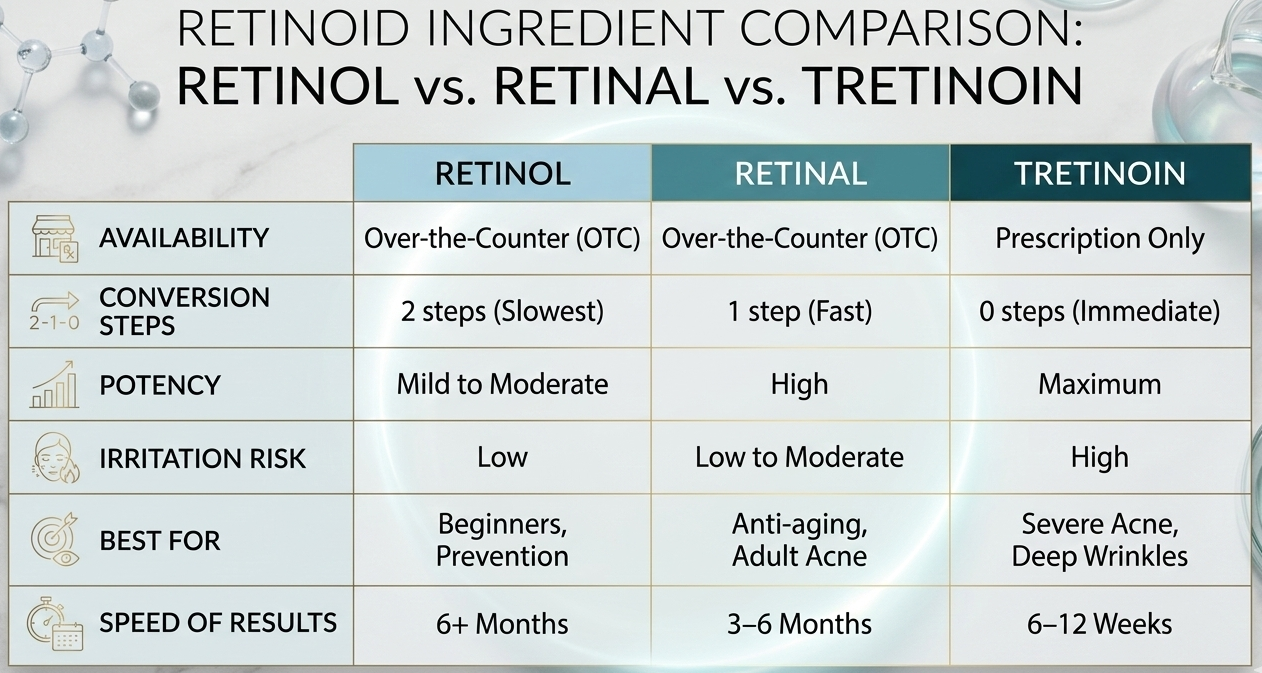
How it works: When you apply Retinol to your skin, it doesn’t work immediately. Your skin must first convert it into Retinal, and then into Retinoic Acid. Only once it becomes Retinoic Acid can it actually talk to your skin cells. Because this is a two-step process, Retinol is slower to show results, but it is much less likely to cause extreme peeling.
2. What is Retinal (Retinaldehyde)?
Retinal (short for Retinaldehyde) is the more potent "big brother" of Retinol. It is also available without a prescription, but it is much more efficient.
How it works: Retinal is only one step away from becoming Retinoic Acid. Research shows that Retinal can work up to 11 times faster than standard Retinol. It is a fantastic middle-ground ingredient for those who have used Retinol but want more dramatic results without the "intensity" of a prescription.
3. What is Tretinoin?
Tretinoin (often known by the brand name Retin-A) is a prescription-only medication. Unlike the other two, Tretinoin is pure Retinoic Acid.
How it works: Because it doesn't need to be converted by the skin, it starts working the second it touches your face. It is significantly more powerful than anything you can buy at a drugstore. Doctors usually prescribe Tretinoin for stubborn acne or advanced signs of aging, but it comes with a high risk of "retinization" (redness and peeling).
4. Key Differences: The Comparison Table
5. Benefits Comparison: What They Do for You
All three ingredients work by speeding up cell turnover, the process of shedding old, dead skin cells and replacing them with fresh ones.
6. Which Skin Type is Best for Each?
7. Comedogenicity and Safety
Comedogenicity
Rating: 0. None of these ingredients clog pores. In fact, they are the best ingredients for unclogging pores and shrinking their appearance.
Irritancy
8. Safety and Allergy Risk
Retinoids have been studied for over 50 years and are remarkably safe. However, in 2026, new EU Regulations capped Retinol concentrations at 0.3% for face products to ensure long-term safety.
Warning: Retinoids (especially Tretinoin) should not be used during pregnancy or breastfeeding.
9. Famous Products to Try
10. Can These Ingredients Be Used Together?
No. Using two types of retinoids at once is like trying to drive two cars at the same time. You will only increase your risk of chemical burns and a broken skin barrier. Pick one and stick to it!
11. FAQ Section
Which ingredient is strongest? Tretinoin. It is pure Retinoic Acid and requires no conversion.
Which works fastest? Tretinoin shows results in as little as 6 weeks. Retinal takes about 11 weeks, and Retinol can take 6 months or more.
Which is best for sensitive skin? Retinol or a very low concentration of Retinal (like 0.01%).
Can I use these with Vitamin C? Yes, but use Vitamin C in the morning and your retinoid at night.