
Best SPF 50 sunscreens for sensitive skin in 2026: a dermatologist-style breakdown
Finding the best SPF 50 sunscreen for sensitive skin often feels like a balancing act between achieving necessary UV protection and avoiding a reactive flare-up. High SPF ratings require a greater concentration of UV filters, which can increase the likelihood of contact dermatitis, stinging, or barrier disruption when poorly formulated.
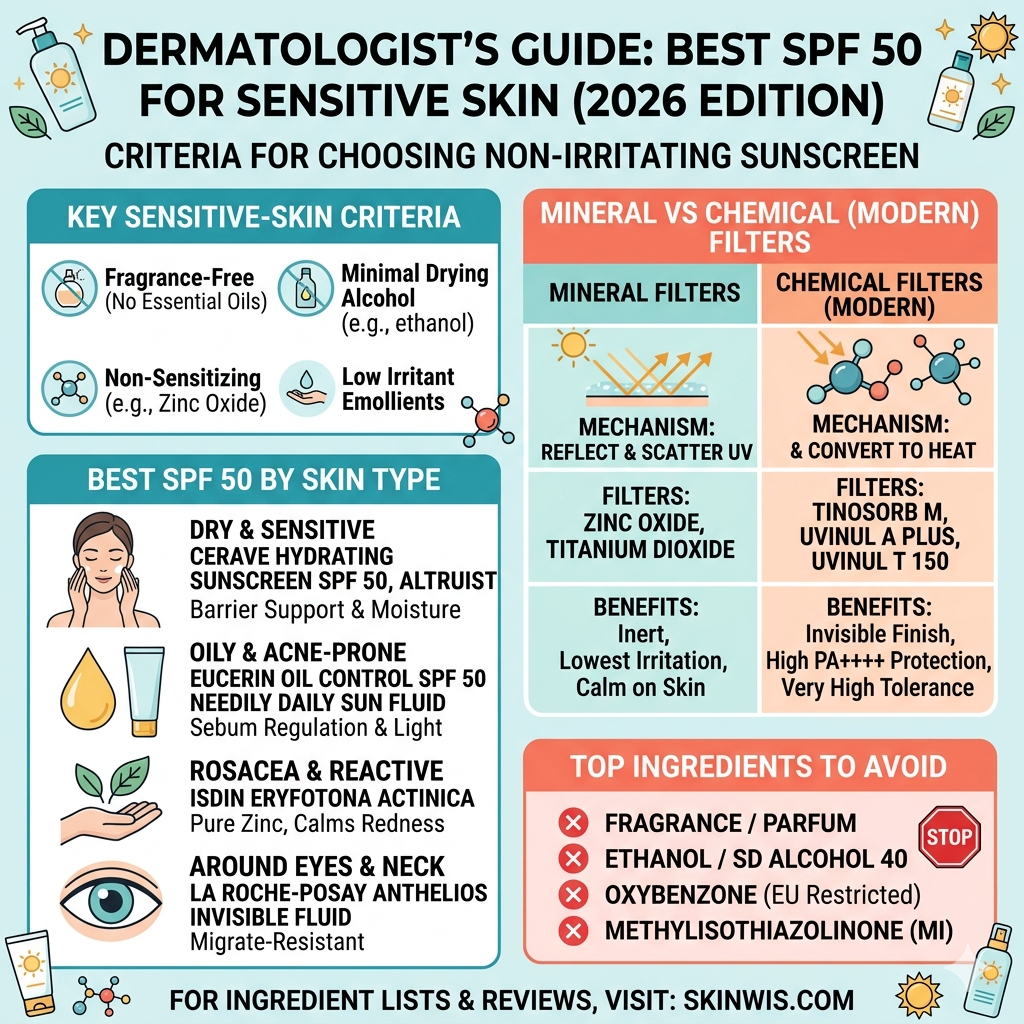
The best SPF 50 sunscreen for sensitive skin is one that balances high-performance UV filters with an inert, soothing base. For a lightweight hybrid option, Needly Daily Sun Fluid SPF 50+ PA++++ delivers high protection without drying alcohols. If your skin is highly reactive to chemical filters, CeraVe Hydrating Sunscreen SPF 50 offers a pure mineral alternative that reinforces the skin barrier. For intense sun exposure, La Roche-Posay Anthelios Invisible Fluid SPF 50+ provides ultra-high, water-resistant protection using advanced, non-irritating filters.
This guide provides an objective, ingredient-led analysis of top-performing formulas, a direct breakdown of mineral versus chemical filters, and a tailored skin-type matching guide to help you select a non-irritating SPF 50 face sunscreen. Understanding the chemistry behind your sun protection is the first step toward maintaining a calm, resilient complexion.
What makes a sunscreen suitable for sensitive skin?
Formulating a high-protection sunscreen for reactive skin requires strict ingredient curation. The primary objective is to minimise the presence of known contact allergens and skin irritants while maintaining emulsion stability.
Fragrance-free and essential-oil-free formulations are critical. Fragrance compounds, including natural essential oils like lavender or citrus oils, are the most common cause of cosmetic contact allergy. When exposed to UV radiation, these volatile compounds can photo-oxidise, turning into even more potent sensitisers that trigger redness, itching, and burning.
The formulation must also contain minimal drying alcohol. While denatured alcohol and ethanol are frequently used to create a weightless, fast-drying texture, they strip the skin barrier of essential lipids, leading to trans-epidermal water loss and increased sensitivity. It is vital to distinguish these from fatty alcohols, such as cetyl, stearyl, or cetearyl alcohol. Fatty alcohols act as non-irritating emollients that help stabilise the cream texture and soften the skin.
UV filter selection dictates the overall tolerability of the product. Traditional mineral filters like zinc oxide and titanium dioxide sit on top of the stratum corneum, making them inherently low-risk. In contrast, older chemical filters like avobenzone or oxybenzone can cause stinging, particularly around the delicate eye area. Modern chemical filters offer a much higher threshold of tolerability.
A low-irritant emollient profile is equally important. Sunscreens designed for sensitive skin must avoid heavy, highly comedogenic oils that trap sweat and sebum, which can aggravate acne-prone conditions. The absence of known industrial sensitisers like methylisothiazolinone, alongside common fragrance constituents like linalool and limonene, ensures the formula remains stable and inert on the skin surface. Selecting the right base prepares your skin to tolerate daily sun defense.
Mineral vs chemical SPF 50 — which is better for sensitive skin?
The debate between mineral and chemical filters depends heavily on the specific molecules used in the formulation. Traditionally, mineral sunscreens have been recommended for highly reactive skin. Zinc oxide and titanium dioxide work primarily by reflecting and scattering a portion of UV rays, though they also absorb a significant amount of UV light and convert it into harmless heat. Because these mineral particles are chemically inert and do not penetrate the viable layers of the epidermis, they rarely induce allergic contact dermatitis. The primary drawback remains the potential for a white cast, though modern micronised or tinted formulations help mitigate this issue.
Chemical sunscreens utilise organic molecules that absorb UV radiation and convert it into thermal energy. Older generation chemical filters, such as oxybenzone and octinoxate, have higher rates of skin sensitisation and can cause a stinging sensation upon application. However, modern European and Asian chemical filters have transformed the landscape for sensitive skin. Molecules like Tinosorb M (Methylene Bis-Benzotriazolyl Tetramethylbutylphenol), Uvinul A Plus (Diethylaminohydroxybenzoyl Hexyl Benzoate or DHHB), and Uvinul T 150 (Ethylhexyl Triazone) feature large molecular weights. These large molecules cannot easily penetrate the stratum corneum, resulting in an exceptionally low irritation profile while delivering superior UVA and UVB stability.
Hybrid sunscreens combine mineral and chemical filters to maximise protection levels while minimizing the heavy texture of pure mineral creams and the potential warmth of pure chemical lotions. For truly reactive, post-procedure, or rosacea-prone skin, a pure mineral formula is typically the safest choice. For sensitive-but-not-reactive skin types that demand an invisible finish, a modern hybrid or advanced chemical formula is often perfectly tolerated.
Filter Type
Tolerability for Sensitive Skin
Inorganic / Mineral (Zinc oxide, Titanium dioxide)
Excellent. Inert molecules that sit on the skin surface. Lowest risk of allergy or eye stinging.
Modern Organic / Chemical (Tinosorb M, Uvinul A Plus, Uvinul T 150)
High. Large molecular sizes prevent deep skin penetration, drastically reducing irritation risks.
Legacy Organic / Chemical (Oxybenzone, Octinoxate, Avobenzone)
Moderate to Low. Higher rates of contact allergy, photo-allergy, and stinging around the eyes.
Evaluating these filter characteristics helps narrow down the specific product category required for your daily routine.
The best SPF 50 sunscreens for sensitive skin in 2026
The following selections represent the highest standard of formulation safety for sensitive skin. Every featured product is fragrance-free, avoids high concentrations of drying alcohols, relies on stable UV filters, and is optimized for daily facial wear.
Needly Daily Sun Fluid SPF 50+ PA++++
Piz Buin Allergy Sun Sensitive Skin Face Cream SPF 50
La Roche-Posay Anthelios Invisible Fluid SPF 50+
Avène Very High Protection Emulsion SPF 50+
Altruist Dermatologist Sunscreen SPF 50
ISDIN Eryfotona Actinica SPF 50+
CeraVe Hydrating Sunscreen SPF 50
Bondi Sands Fragrance Free SPF 50+
Eucerin Sun Gel-Cream Oil Control SPF 30
Reviewing these individual ingredient profiles makes it easier to match specific products to distinct skin conditions.
Best SPF 50 by skin type, quick-match guide
Dry and sensitive skin
Dry skin requires an SPF that behaves like a rich emollient cream. CeraVe Hydrating Sunscreen SPF 50 is excellent because its ceramide-dominant base replenishes lost lipids while providing pure mineral defense. Alternatively, Altruist Dermatologist Sunscreen SPF 50 offers a deeply hydrating, cost-effective option that eliminates winter flakiness without irritating the skin barrier. For a direct comparison of how these two rich textures behave under daily wear, you can check the comparison CeraVe Hydrating Sunscreen SPF 50 vs Altruist Dermatologist Sunscreen SPF 50.
Oily and acne-prone skin (with sensitivity)
Managing excess sebum alongside a compromised skin barrier requires a lightweight, non-comedogenic texture. Eucerin Sun Gel-Cream Oil Control SPF 30 utilizes oil-absorbing micro-particles to regulate shine without causing contact irritation. Needly Daily Sun Fluid SPF 50+ PA++++ also serves this skin profile well, providing a weightless fluid texture that hydrates with hyaluronic acid rather than heavy oils, ensuring pores remain clear and calm. Checkout the comparison Eucerin Sun Gel-Cream Oil Control SPF 30 vs Needly Vegan Mild Moisture Sun SPF 50+ PA++++
Rosacea-prone or reactive skin
Skin prone to flushing, visible capillaries, and extreme reactivity demands minimal chemical interference. ISDIN Eryfotona Actinica SPF 50+ delivers pure, non-irritating zinc oxide in a smooth fluid that bypasses the friction associated with thick mineral pastes. The zinc oxide also acts as a natural anti-inflammatory agent, helping to soothe the heat sensations frequently experienced by rosacea patients during daily sun exposure.
Sensitive skin around the eyes and on the neck
The skin surrounding the eyes is exceptionally thin and prone to chemical stinging. La Roche-Posay Anthelios Invisible Fluid SPF 50+ is an ideal candidate for this area because its Netlock technology anchors the filters in place, preventing them from migrating into the eyes when you sweat. For a broader look at how different brands handle high-migration zones, explore the [INTERNAL LINK: skinwis.com sensitive skin sunscreen compare hub].
Ingredients to avoid in SPF if you have sensitive skin
When auditing sunscreen ingredient lists, identifying potential sensitisers before purchase can prevent adverse reactions.
Oxybenzone (also listed as benzophenone-3) is a legacy chemical filter with documented rates of photo-allergic contact dermatitis. While its regulatory status in the EU has seen stricter maximum concentration limits implemented across 2025 and 2026 due to systemic absorption concerns, it remains present in various global markets and should be avoided by highly sensitive individuals.
Ethanol or SD alcohol 40, when positioned near the top of an ingredient deck, acts as a penetration enhancer that dissolves skin-surface lipids. This rapid evaporation compromises the moisture barrier, leaving the skin vulnerable to environmental triggers.
Parfum or fragrance is a complex mixture of undisclosed aromatic chemicals that serves no therapeutic purpose in sun care. It remains the leading cause of cosmetic-induced allergic reactions. Similarly, linalool and limonene are volatile fragrance components often hidden within botanical extracts. Even in formulas marked as "unscented," these compounds can oxidise over time, transforming into irritants that cause delayed contact dermatitis.
Methylisothiazolinone is a potent synthetic preservative that has largely been phased out of leave-on face creams but can still appear in some broad-spectrum sunscreens. It is a well-known allergen capable of causing severe skin sensitization.
Finally, octocrylene can lead to contact allergies, particularly in individuals with a pre-existing sensitivity to topical anti-inflammatory gels containing ketoprofen. It is highly stable but more prone to causing localized itching or redness than modern alternatives.
To cross-reference these potentially problematic components across various formulations, utilize the skinwis.com ingredient comparison tool to analyze any bottle before buying.
How to apply SPF 50 correctly on sensitive skin
Achieving the stated SPF 50 protection on the label requires applying the correct volume of product. For the face and neck, apply a full two-finger length of sunscreen. Under-applying drastically reduces the protection level, turning an SPF 50 into the equivalent of an SPF 15 or lower.
[Two-Finger Rule: One full strip of cream on the index finger + one full strip on the middle finger]
Timing your application depends on the type of UV filters used. Pure mineral sunscreens provide immediate physical protection upon application. Sunscreens utilizing chemical filters should be applied 15 minutes before sun exposure to allow the emulsion to form a uniform, cohesive film over the microscopic contours of the skin. Reapplication must occur every two hours during continuous outdoor exposure, regardless of whether the day is cloudy, as UVA rays pass easily through cloud cover and standard window glass.
Layering sunscreen correctly prevents the formula from breaking down. Always apply your SPF 50 as the final step of your morning skincare routine, after your moisturizer has fully dried, and before applying any makeup. At the end of the day, a thorough double cleanse is essential. Use a gentle emulsifying cleansing oil or balm followed by a hydrating water-based cleanser to completely remove water-resistant UV filters without stripping your skin barrier.
Tip: To prevent the physical friction that triggers redness in reactive skin, pat your sunscreen into the skin gently rather than rubbing it in aggressively.
Frequently asked questions
Is SPF 50 better than SPF 30 for sensitive skin?
SPF 50 blocks approximately 98% of UVB rays, whereas SPF 30 blocks about 97%. While the mathematical difference is small, the higher rating provides a vital safety margin for sensitive skin types prone to hyperpigmentation or solar erythema. The key is ensuring the SPF 50 formula uses modern, non-irritating filters rather than high amounts of older chemical filters that cause stinging.
Can SPF cause breakouts on sensitive skin?
Yes. Sunscreens can trigger breakouts if they contain highly comedogenic emollient bases like isopropyl palmitate or heavy waxes that trap sebum. Sensitivity-induced breakouts also occur when drying alcohols strip the skin, prompting an overproduction of compensatory oil. Choosing an oil-control, non-comedogenic fluid minimizes this risk.
Is mineral sunscreen always better for sensitive skin?
Not necessarily. While pure mineral sunscreens containing zinc oxide are excellent for highly reactive or post-procedure skin due to their inert nature, modern chemical sunscreens formulated with large-molecule filters like Tinosorb or Uvinul A Plus are exceptionally well tolerated. These modern organic filters eliminate the heavy texture and white cast of mineral creams without causing irritation.
Can I use SPF on skin with rosacea?
You must use SPF daily if you have rosacea, as UV radiation is one of the most common triggers for rosacea flare-ups and facial flushing. A pure mineral sunscreen featuring zinc oxide is highly recommended for this condition, as it reflects heat-generating rays and delivers a natural, mild anti-inflammatory effect to keep the skin calm.
Selecting an effective SPF 50 sunscreen requires evaluating the entire formulation matrix rather than relying on front-label marketing claims. By focusing on modern, large-molecule UV filters, avoiding drying alcohols, and skipping unnecessary fragrances, you can maintain dependable broad-spectrum defense without compromising your skin barrier. To compare these ingredient lists side by side and find your ideal match, explore the skinwis.com sunscreen hub before making your next purchase.