
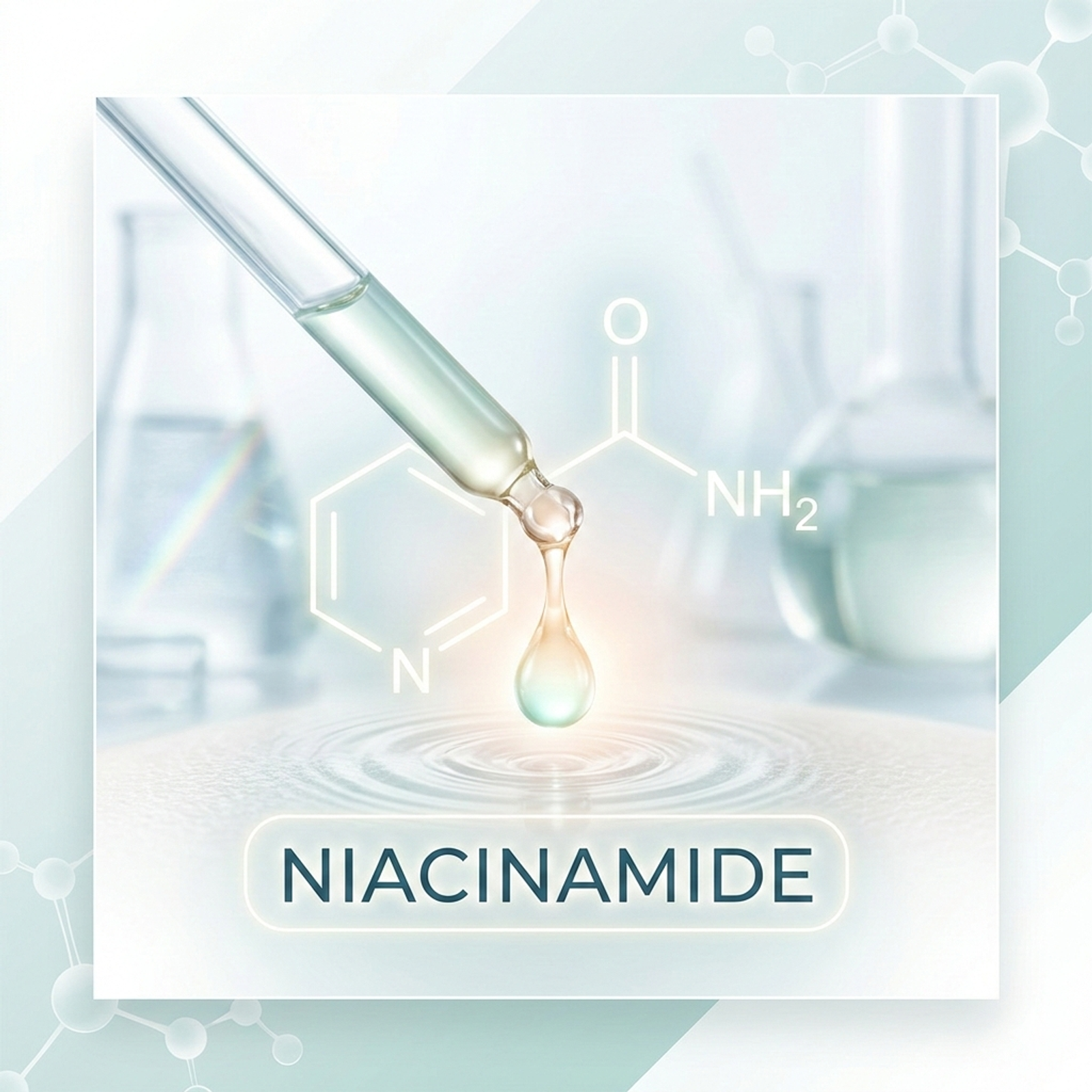
Niacinamide for Skin: Benefits, Safety, Comedogenic Rating, and Best Skin Types
If there is one "celebrity" ingredient in the skincare world that actually lives up to the hype, it’s Niacinamide. Whether you are looking to shrink the appearance of pores, soothe redness, or fight fine lines, Niacinamide is likely the answer.
In this comprehensive guide, we will break down the science behind this powerhouse molecule, explore its benefits, and help you decide how to incorporate it into your daily routine.
1. What is Niacinamide?
Scientifically known as Niacinamide, Niacinamide is a water-soluble form of Vitamin B3. It is an essential nutrient that our bodies need but cannot produce on their own. In the context of cosmetics, it is a stable, low-molecular-weight compound that can easily penetrate the skin's surface.
The Science of How It Works
At a cellular level, Niacinamide is a precursor to two deeply important coenzymes: NAD+ (Nicotinamide Adenine Dinucleotide) and NADP+. These molecules are the "energy currency" for your cells.
When you apply Niacinamide topically, it helps fuel chemical reactions that allow skin cells to repair damage, replicate, and function efficiently. This is why it is used so widely; it doesn’t just sit on the surface—it tells your skin to get to work.
2. What Does Niacinamide Do for the Skin?
Niacinamide acts as a multitasker. Its primary biological mechanism involves increasing the antioxidant capacity of the skin after topical application.
Research shows that it helps stabilize the skin barrier by increasing the production of ceramides—the lipids (fats) that act as the "glue" holding your skin cells together. Strengthening this barrier, it prevents transepidermal water loss (TEWL) and keeps environmental irritants out.
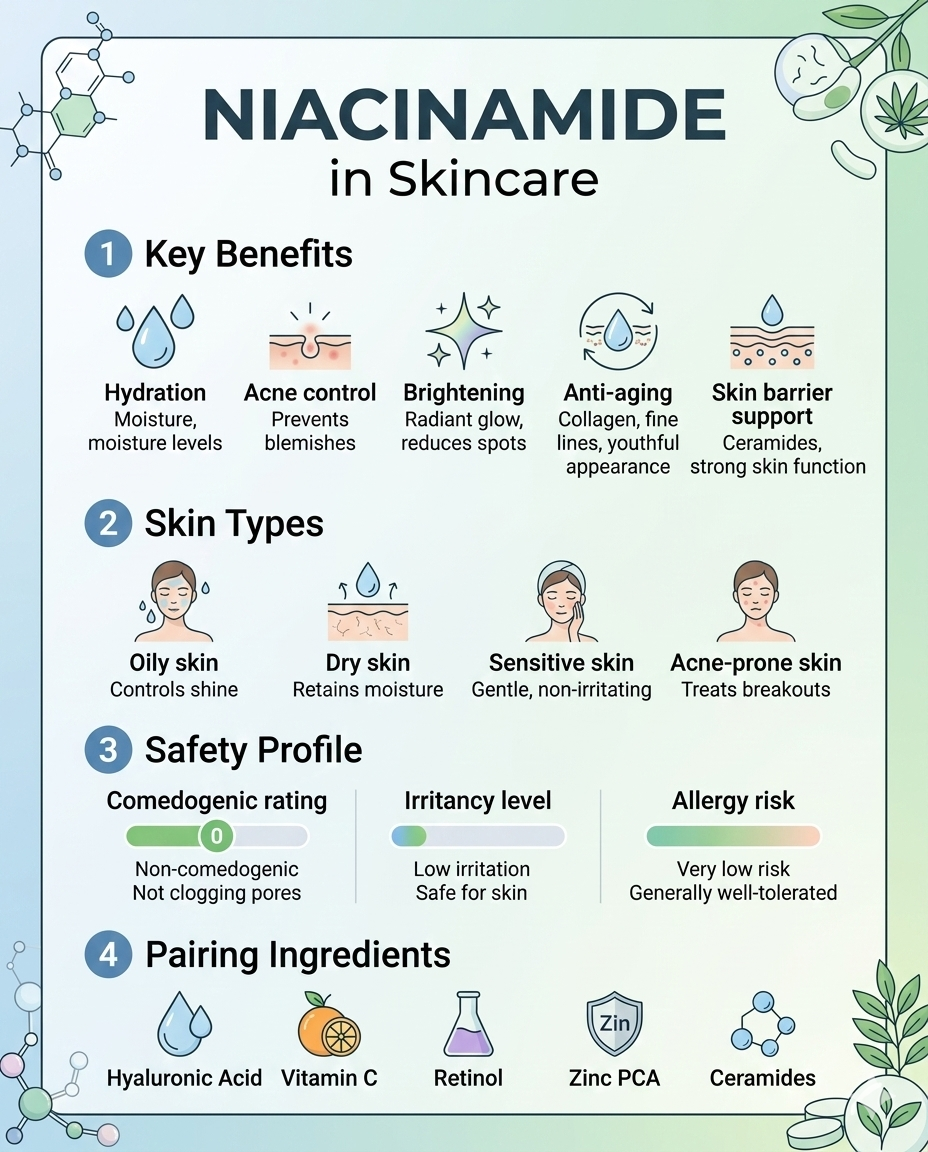
3. Top Benefits of Niacinamide for Skin
Scientific literature, including studies published in the Journal of Cosmetic Dermatology, confirms several key benefits:
4. What Skin Types is Niacinamide Good For?
One of the reasons niacinamide is so popular is its versatility.
5. Comedogenicity and Pore Health
Comedogenic Rating: 1 (Non-comedogenic)
Niacinamide is officially rated as non-comedogenic. This means it does not clog pores. In fact, it does the opposite. By balancing oil production and keeping the lining of the pores elastic, it prevents the buildup of debris that leads to blackheads and whiteheads. It is one of the safest ingredients for those prone to congestion.
6. Irritancy and Safety Profile
Irritancy Potential
Niacinamide is generally considered low-irritant. However, the concentration matters.
Safety and Allergy Risk
According to the Cosmetic Ingredient Review (CIR) Expert Panel, Niacinamide is safe for use in cosmetics. True allergies to Niacinamide are rare. Most "reactions" are actually sensitivities to high concentrations or other ingredients in the formula (like preservatives).
7. What Types of Products Contain Niacinamide?
Because it is a stable molecule (it doesn't break down easily in light or air), it is found in almost every category of skincare:
8. Famous Product Example: The Ordinary Niacinamide 10% + Zinc 1%
This is perhaps the most famous Niacinamide product in the world. Its popularity stems from its high concentration and affordable price point. The addition of Zinc PCA helps further control oil, making it a "holy grail" for teenagers and adults with oily, acne-prone skin.
9. How to Shop for Niacinamide
When looking for a product, keep these tips in mind:
Niacinamide" near the top of the list.10. How Long Does It Take to Work?
Skincare is a marathon, not a sprint.
11. What Ingredients Can Be Paired with Niacinamide?
Niacinamide is a "team player." It works well with:
12. Does Niacinamide Cause Purging?
No, Niacinamide does not cause purging. "Purging" only happens with ingredients that speed up cell turnover (like Retinoids or AHAs). If you break out after using a Niacinamide serum, it is likely a reaction to a high concentration or a different ingredient in the product, rather than a purge.
13. FAQ Section
What is Niacinamide? It is a form of Vitamin B3 that helps skin repair and maintain its barrier.
What does Niacinamide do? It improves skin texture, reduces redness, fades dark spots, and regulates oil.
What is Niacinamide good for? It is good for anti-aging, acne, brightening, and hydrating the skin.
What skin type is Niacinamide good for? All skin types, including oily, dry, sensitive, and combination.
How to shop for Niacinamide skincare products? Look for a concentration of 2%–10% and choose a serum or moisturizer based on your skin's needs.
How long does Niacinamide take to work? Visible results typically appear between 4 and 12 weeks of consistent use.
Does Niacinamide cause purging? No. It does not increase cell turnover, so it should not cause a traditional "purge."