
Allantoin for Skin: Benefits, Safety, Comedogenic Rating, and Best Skin Types
In the fast-moving world of skincare, where "miracle" acids and high-strength retinols grab all the headlines, there is a quiet hero working behind the scenes in thousands of your favorite products: Allantoin.
Whether you have sensitive skin, are battling acne, or just want a healthy glow, Allantoin is likely already in your routine. But what exactly is it, and why do dermatologists love it so much? This comprehensive guide breaks down everything you need to know about this soothing powerhouse.
What is Allantoin?
Allantoin is a naturally occurring compound found in the roots and leaves of the Comfrey plant (Symphytum officinale), though it is also found in sugar beets, chamomile, and wheat sprouts. In the world of cosmetic science, the Allantoin used in your creams and serums is typically synthesized in a lab to ensure purity and stability, but it remains bio-identical to the version found in nature.
The Science Simplified
Chemically, Allantoin is a diureide of glyoxylic acid. It is classified as a skin protectant and a keratolytic agent.
What Does Allantoin Do for the Skin?
Allantoin functions primarily as a cell proliferant. This is a fancy way of saying it encourages skin cells to regenerate. When applied to the skin, it stimulates the fibroblasts (the cells responsible for producing collagen) and promotes the healing of the extracellular matrix.
According to research published in Pediatric Dermatology, Allantoin is recognized for its ability to speed up wound healing by stimulating cell turnover and improving the local microcirculation. It doesn't just sit on top of the skin; it actively signals the skin to repair itself.
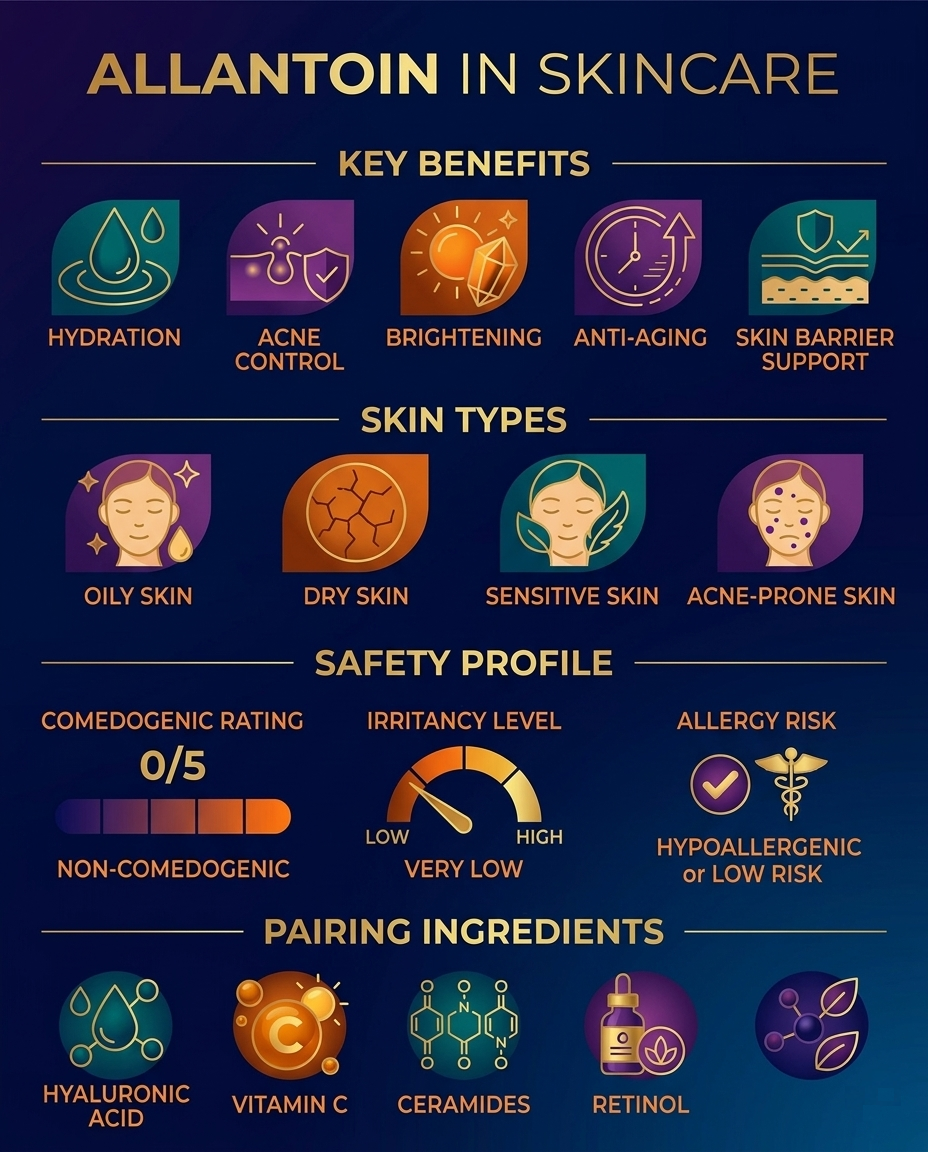
Key Benefits of Allantoin for Skin
While it is best known for being "gentle," Allantoin offers a wide range of biological benefits:
1. Intense Hydration
Allantoin is a powerful humectant, meaning it helps the skin hold onto water. Unlike heavy oils that sit on the surface, Allantoin increases the water content of the extracellular matrix, giving the skin a "plump" and smooth appearance.
2. Gentle Exfoliation (Keratolytic Effect)
It helps desquamation—the natural process of shedding dead skin. By softening the keratin in the skin, it smooths out rough texture without the stinging or redness associated with chemical peels.
3. Anti-Aging Support
By promoting cell proliferation and soothing chronic inflammation (a major driver of aging known as "inflammaging"), Allantoin helps maintain a youthful skin barrier. Research in the Journal of Cosmetic Dermatology suggests that well-hydrated, calm skin is more resilient against fine lines.
4. Acne Control and Healing
For those with acne, Allantoin is a double threat. It helps clear out dead skin cells that might clog pores and simultaneously soothes the red, angry inflammation associated with breakouts.
5. Barrier Repair
It stimulates the production of lipids and proteins in the skin, strengthening the "moisture barrier." This makes it an essential ingredient for recovering from a "compromised barrier" (over-exfoliation or harsh weather).
6. Antioxidant Effects
While not as potent as Vitamin C, Allantoin exhibits some antioxidant properties that help neutralize free radicals caused by UV exposure and pollution.
What Skin Types is Allantoin Good For?
One of the reasons Allantoin is a "formulator's favorite" is its universal appeal.
Comedogenicity: Does Allantoin Clog Pores?
Comedogenic Rating: 1 out of 5
Allantoin is officially classified as non-comedogenic. It does not clog pores. In fact, due to its keratolytic properties, it can actually help prevent the formation of comedones (blackheads and whiteheads) by ensuring dead skin cells are shed properly rather than becoming trapped in the follicle.
Irritancy Potential
Allantoin is widely regarded as one of the least irritating ingredients in skincare.
Safety and Allergy Risk
Allantoin has an excellent safety profile. The Cosmetic Ingredient Review (CIR) Expert Panel has evaluated Allantoin and found it to be safe for use in cosmetics at current concentrations. It is non-sensitizing and non-phototoxic, meaning it won’t make your skin more sensitive to the sun.
"Allantoin is recognized by the FDA as a Category I (safe and effective) skin protectant."
What Types of Products Contain Allantoin?
You will find Allantoin in almost every category of skincare:
Famous Product Spotlight: The Ordinary Natural Moisturizing Factors + HA
A prime example of a popular product featuring Allantoin is The Ordinary’s Natural Moisturizing Factors + HA.
Why it’s popular: This moisturizer mimics the skin’s natural barrier. It uses Allantoin alongside amino acids and lipids to provide a non-greasy, "skin-identical" repair system. Users love it because it feels lightweight but provides the deep soothing relief typical of much thicker creams.
How to Shop for Allantoin
When looking for the best Allantoin products, keep these tips in mind:
How Long Does Allantoin Take to Work?
Skincare is a marathon, not a sprint, but Allantoin offers some quick wins:
Compatible Ingredients (The Best Pairings)
Allantoin plays well with others. Here are the best combinations:
Does Allantoin Cause Purging?
No. Allantoin does not cause purging. "Purging" typically happens with ingredients that drastically increase cell turnover, like Retinoids or AHAs. While Allantoin does help shed dead skin, it does so in a very gentle, non-inflammatory way. If you experience a breakout after using a new product with Allantoin, it is likely due to another ingredient in the formula (like a heavy oil or fragrance) rather than the Allantoin itself.
FAQ Section
What is Allantoin?
It is a soothing compound found in plants (like Comfrey) or produced synthetically. It is used in skincare to protect, soothe, and heal the skin.
What does Allantoin do?
It moisturizes, sheds dead skin cells, promotes wound healing, and reduces skin irritation.
What is Allantoin good for?
It is excellent for soothing redness, healing minor cuts or acne scars, and smoothing rough skin texture.
What skin type is Allantoin good for?
All skin types, especially sensitive, dry, and acne-prone skin.
What types of skincare products contain Allantoin?
It is found in moisturizers, serums, toners, sunscreens, and even after-shave balms.
How to shop for Allantoin skincare products?
Look for "Allantoin" on the label. It works best in leave-on creams and serums that focus on barrier repair.
How long does Allantoin take to work?
Soothing effects are almost immediate, while texture improvements take about 2–4 weeks.
What ingredients can be paired with Allantoin?
It can be paired with almost anything, including Retinol, Vitamin C, Hyaluronic Acid, and AHAs/BHAs.
Does Allantoin cause purging?
No, Allantoin is a soothing agent and does not cause the skin to purge or break out.