
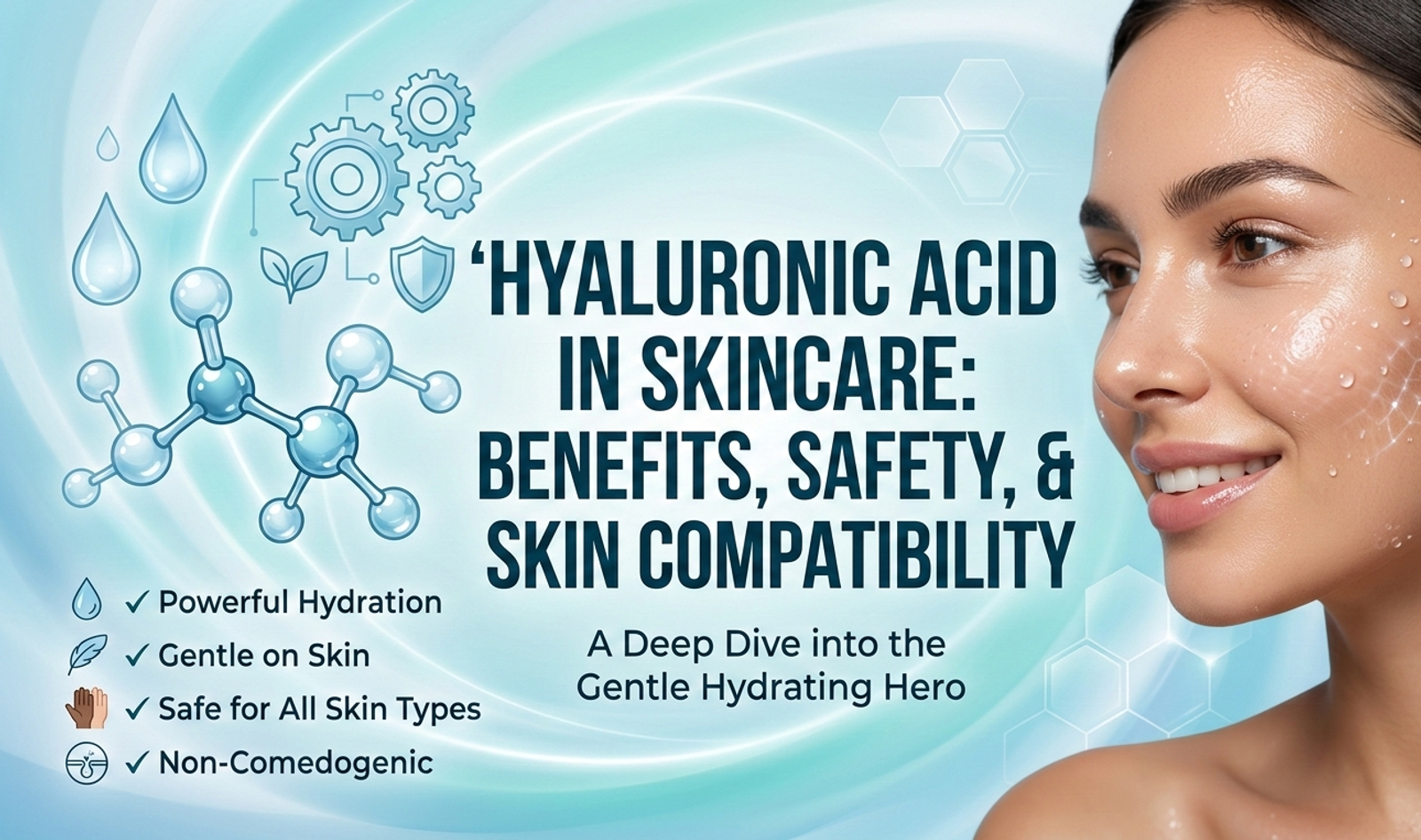
Hyaluronic Acid in Skincare: Benefits, Safety, Comedogenicity, and Allergy Risk
Hyaluronic Acid is one of the most popular ingredients in modern skincare. Known for its powerful hydrating properties, it is widely used in serums, moisturizers, toners, and anti-aging treatments.
Despite the word acid, hyaluronic acid is gentle, hydrating, and suitable for nearly all skin types, including sensitive and acne-prone skin.
In this guide, we explore:
What Is Hyaluronic Acid?
Hyaluronic acid is a naturally occurring sugar molecule found in the human body, especially in:
Its main function is to retain moisture and keep tissues hydrated.
One molecule of hyaluronic acid can hold up to 1000 times its weight in water, making it one of the most effective hydrating ingredients used in cosmetic formulations.
Because of its strong water-binding properties, hyaluronic acid acts as a humectant, meaning it pulls moisture from the environment into the skin.
Benefits of Hyaluronic Acid in Skincare
1. Intense Skin Hydration
Hyaluronic acid attracts and binds water to the skin, helping maintain moisture levels.
Benefits include:
Hydrated skin often appears smoother, brighter, and healthier.
2. Strengthens the Skin Barrier
Healthy skin relies on a strong moisture barrier. Hyaluronic acid helps maintain this barrier by preventing excessive water loss.
It helps:
3. Suitable for All Skin Types
Hyaluronic acid works well for:
Because it is lightweight and oil-free, it does not leave a greasy residue.
Is Hyaluronic Acid Comedogenic?
No. Hyaluronic acid is considered non-comedogenic.
This means it does not clog pores or contribute to acne formation.
In fact, proper hydration may help balance sebum production, which can benefit people with oily or acne-prone skin.
Can Hyaluronic Acid Cause Irritation?
Hyaluronic acid has very low irritation potential.
Most people tolerate it extremely well, which is why it is commonly used in products designed for:
However, rare irritation may occur if:
To avoid dryness, apply hyaluronic acid to slightly damp skin and seal it with a moisturizer.
Can Hyaluronic Acid Cause Allergies?
Allergic reactions to hyaluronic acid are extremely rare.
Because hyaluronic acid naturally exists in the body, it is considered highly biocompatible.
When reactions occur, they are usually caused by other ingredients in the formula, such as:
Choosing fragrance-free products reduces the likelihood of irritation.
Common Forms of Hyaluronic Acid in Skincare
Many skincare products use different forms of hyaluronic acid.
One common derivative is:
Sodium Hyaluronate has smaller molecules, allowing it to penetrate the skin more effectively and deliver hydration.
Other variants may include:
These forms help improve hydration duration and skin penetration.
How to Use Hyaluronic Acid in Your Skincare Routine
For best results:
It pairs well with ingredients like:
Hyaluronic Acid Safety Summary
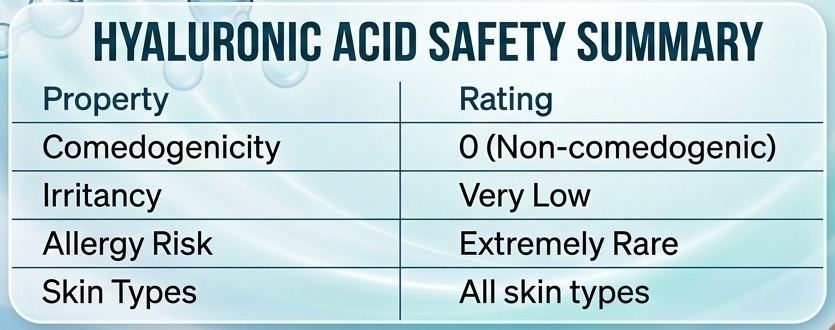
Hyaluronic acid is widely regarded as one of the safest and most effective skincare ingredients for hydration.
FAQ: Hyaluronic Acid in Skincare
Is hyaluronic acid good for acne-prone skin?
Yes. Hyaluronic acid is non-comedogenic and lightweight, meaning it does not clog pores. It can help hydrate acne-prone skin without worsening breakouts.
Can hyaluronic acid cause breakouts?
Hyaluronic acid itself does not cause acne. If breakouts occur, they are usually caused by other ingredients in the product formulation.
Can sensitive skin use hyaluronic acid?
Yes. Hyaluronic acid is considered safe for sensitive skin because it has very low irritation potential.
Should I use hyaluronic acid every day?
Yes. Hyaluronic acid can be used daily, both morning and night, to maintain skin hydration.
Do you need moisturizer after hyaluronic acid?
Yes. Hyaluronic acid should be followed by a moisturizer to seal hydration into the skin and prevent moisture loss.
What skin type benefits most from hyaluronic acid?
All skin types benefit from hyaluronic acid, but it is especially useful for dry, dehydrated, and aging skin.