
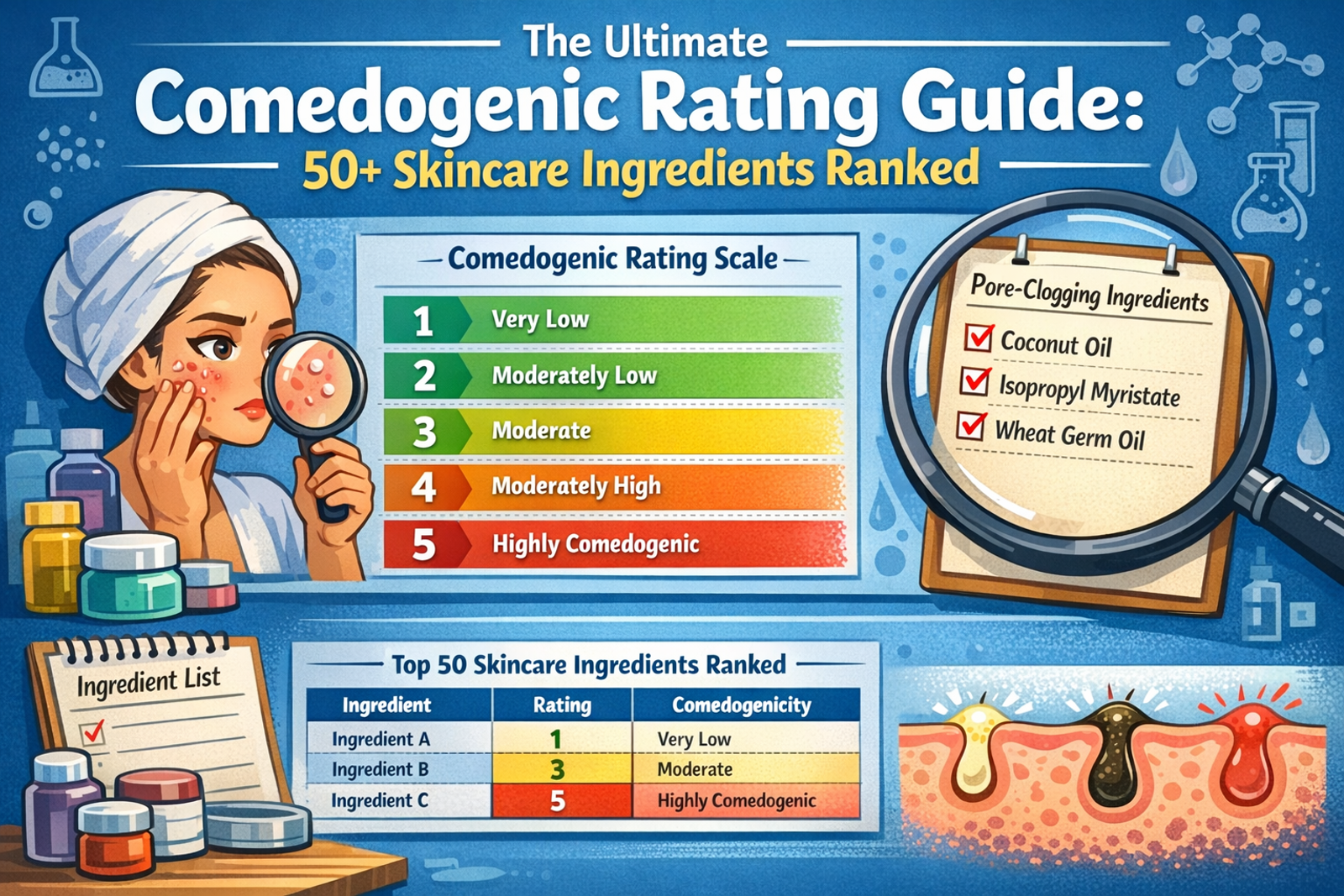
The Ultimate Comedogenic Rating Guide: 50+ Skincare Ingredients Ranked
Are you tired of battling breakouts, clogged pores, and congested skin? You've meticulously cleansed, toned, and moisturized, yet those pesky blemishes keep reappearing. The culprit might be hiding in plain sight: the ingredients in your skincare products. Welcome to the world of comedogenic ratings, a crucial tool for anyone striving for clear, healthy skin.
This comprehensive guide will arm you with the knowledge to decipher ingredient lists and identify potential pore-cloggers. We'll explain what "comedogenic" truly means, break down the rating scale, and provide a master table of over 50 common skincare ingredients, ranked by their likelihood to clog pores. Get ready to become an ingredient detective and transform your skincare routine!
What Does "Comedogenic" Mean, Anyway?
The term "comedogenic" refers to an ingredient's tendency to block pores, leading to the formation of comedones (the scientific term for blackheads and whiteheads). When pores become clogged with dead skin cells, excess oil (sebum), and bacteria, it creates a perfect breeding ground for acne.
It's important to understand that an ingredient being "comedogenic" doesn't guarantee you'll break out. Skin types vary greatly, and what might cause issues for one person could be perfectly fine for another. However, if you have acne-prone, oily, or sensitive skin, paying close attention to comedogenic ratings can be a game-changer.
The Comedogenic Rating Scale Explained (1-5)
Comedogenic ratings typically range from 1 to 5, with each number indicating a higher likelihood of clogging pores:
A Note on Testing: Comedogenic ratings are often derived from various tests, including rabbit ear tests and human patch tests. While these provide valuable insights, it's crucial to remember that a product's overall formulation can influence an ingredient's comedogenicity. An ingredient that is highly comedogenic on its own might be diluted to a non-comedogenic level in a final product.
The Master Ingredient Table: 50+ Skincare Ingredients and Their Comedogenic Ratings
Here's our comprehensive list of common skincare ingredients and their estimated comedogenic ratings. Use this table as your go-to reference when scrutinizing product labels.
Ingredient Name Comedogenic Rating
Disclaimer: Comedogenic ratings can be subjective and vary based on research sources and individual skin reactions. This table serves as a general guide.
Most Common Pore-Cloggers to Avoid (Especially If You're Acne-Prone)
While every ingredient listed above has its place, some stand out as frequent offenders for those prone to breakouts. If you're struggling with acne or congestion, it's wise to be particularly wary of ingredients with a rating of 3 or higher.
Skinwis Tool to Check Your Products
Navigating ingredient lists can be overwhelming, especially when you're trying to remember dozens of comedogenic ratings. That's where Skinwis comes in!
Our powerful Skinwis product analyzer takes the guesswork out of your skincare routine. Simply input the ingredient list of any product, and Skinwis will:
Stop guessing and start knowing! Use the Skinwis product analyzer today and discover if your favorite products are truly working for your skin, or silently working against it.