
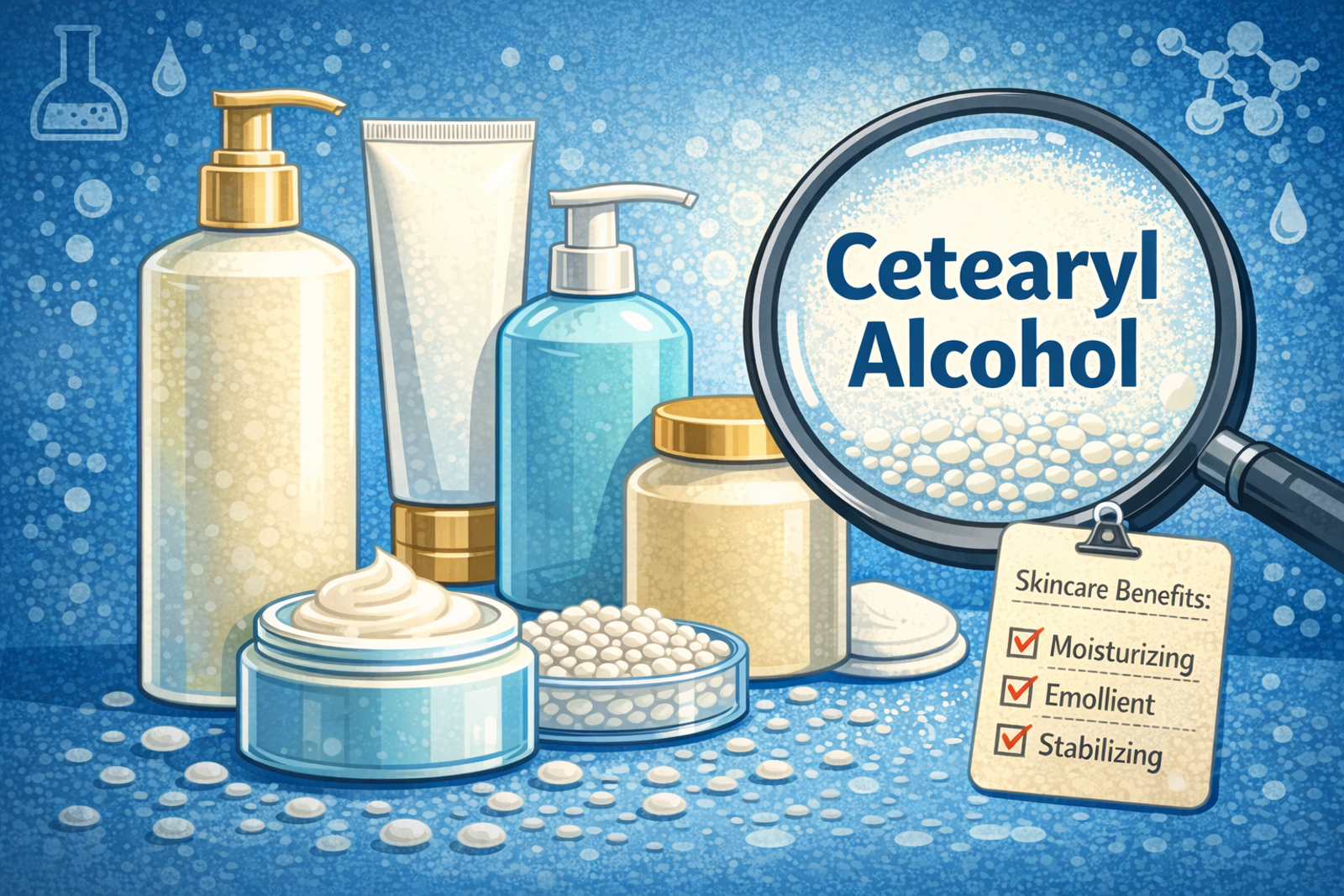
Cetearyl Alcohol in Skincare: Does It Clog Pores? Comedogenic Rating Explained
When you spot the word "alcohol" on a skincare ingredient list, it's natural to feel a pang of apprehension, especially if you have acne-prone or sensitive skin. Many types of alcohol are known for their drying and irritating effects, but not all alcohols are created equal. Cetearyl alcohol is one such ingredient that often sparks confusion and concern.
Is cetearyl alcohol a friend or foe to your skin? Does it clog pores? In this guide, we'll demystify cetearyl alcohol, explain its role in skincare, delve into its comedogenic rating, and help you determine if it's an ingredient you should embrace or avoid.
Cetearyl Alcohol vs. Cetyl Alcohol: What's the Difference?
Before we tackle its pore-clogging potential, let's clarify a common point of confusion: the difference between cetearyl alcohol and cetyl alcohol. While they sound similar and are often found together, they are distinct ingredients.
Both cetyl alcohol and cetearyl alcohol are considered "good" alcohols in skincare, in contrast to "bad" alcohols like ethanol or isopropyl alcohol, which can be drying and irritating. Fatty alcohols help to condition the skin, prevent moisture loss, and improve product texture, rather than stripping the skin of its natural oils.
Is Cetearyl Alcohol Comedogenic? (Rating + Context)
Now for the burning question: does cetearyl alcohol clog pores?
According to most widely accepted comedogenic rating scales, cetearyl alcohol has a comedogenic rating of 2.
To put this into context, remember our scale from 1 to 5:
A rating of 2 means that cetearyl alcohol is generally considered safe for most skin types and is unlikely to cause significant pore clogging for the majority of users. It's not in the high-risk category like ingredients with ratings of 4 or 5 (e.g., coconut oil, isopropyl myristate).
Important Context:
Who Should Avoid It?
Given its low comedogenic rating, most people will tolerate cetearyl alcohol without any issues. However, if you fall into one of these categories, you might consider exercising caution or patch-testing products containing it:
For the vast majority, especially those with normal, dry, or mildly sensitive skin, cetearyl alcohol is a beneficial ingredient that helps improve product texture and skin hydration without causing breakouts.
Acne-Safe Alternatives (If You Choose to Avoid)
If you decide to err on the side of caution and look for alternatives, or if you're exploring products specifically marketed as "non-comedogenic" for extremely sensitive skin, here are some common non-comedogenic emollients and thickeners:
Common Products That Contain Cetearyl Alcohol
Cetearyl alcohol is a ubiquitous ingredient due to its versatility and beneficial properties. You'll find it in a wide array of skincare and haircare products, including:
The Bottom Line
For most people, cetearyl alcohol is a safe and beneficial ingredient in skincare, acting as an excellent emollient and texturizer. Its comedogenic rating of 2 means it has a low likelihood of clogging pores. Unless you have extremely sensitive, highly reactive, or severely acne-prone skin and have noticed a direct correlation with products containing it, there's generally no need to avoid cetearyl alcohol.
Still unsure about the products in your routine? Want to see if your go-to moisturizer contains cetearyl alcohol or other potentially problematic ingredients?
See which of your products contain cetearyl alcohol! Use our Skinwis product analyzer to get a detailed breakdown of your ingredient lists. You can also explore our comprehensive Ultimate Comedogenic Rating Guide: 50+ Skincare Ingredients Ranked for more insights into common skincare ingredients.