
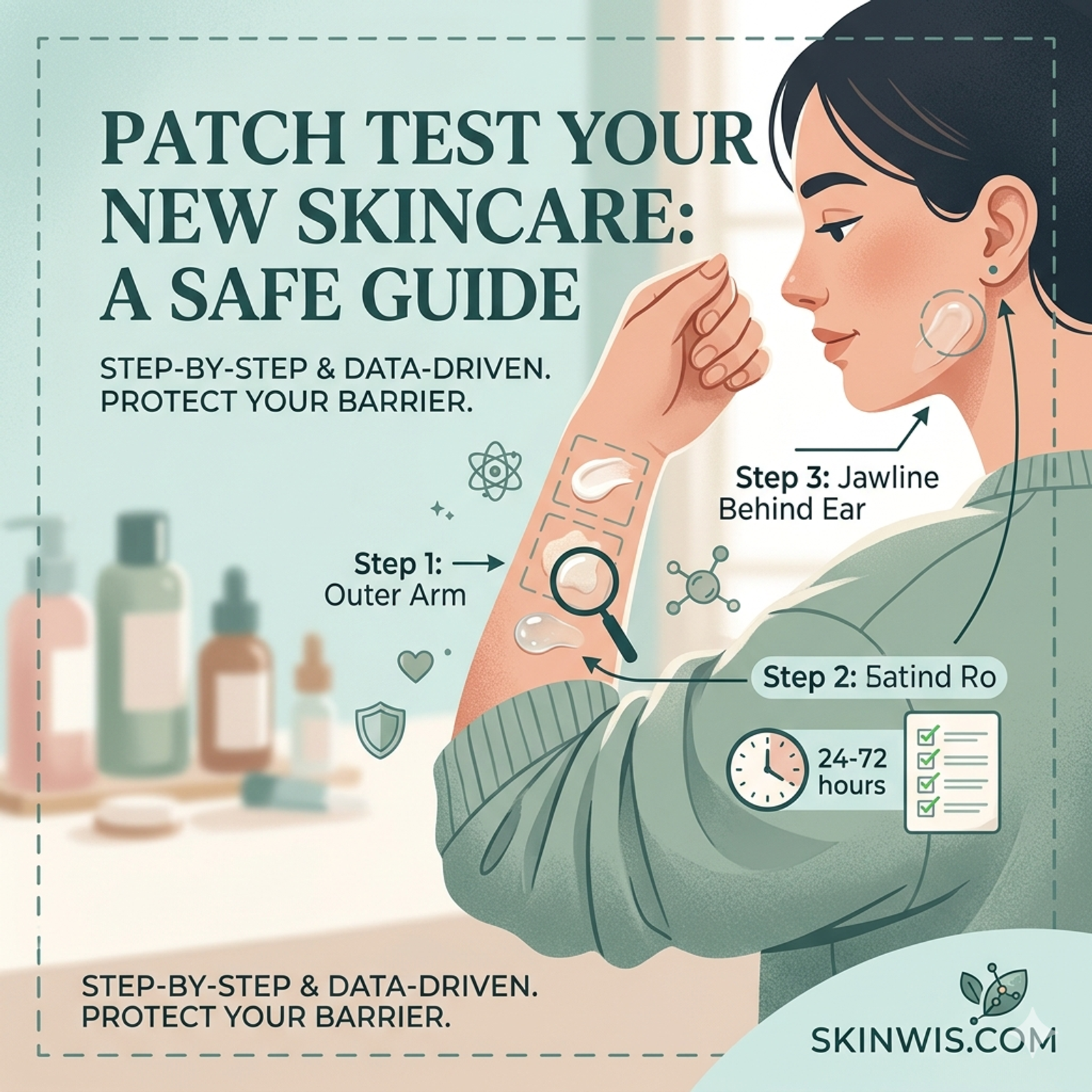
How to patch test a new skincare product: a step-by-step guide
Unboxing a brand new moisturiser or targeted serum brings a wave of excitement, especially when you are hoping it will finally calm your redness, smooth your texture, or clear up persistent congestion. However, that excitement often comes with a quiet sense of hesitation if your skin has reacted badly to new formulas in the past. Taking the time to execute a proper skin assessment feels like an inconvenient extra step when you simply want to see immediate results, but dedicating a few days to safety can protect your skin barrier from weeks of painful inflammation. Learning how to patch test skincare is the single most effective way to ensure your new purchase delivers the results you want without causing a distressing cosmetic setback.
What is a patch test — and why does it matter?
A patch test is a simple method used to determine whether a cosmetic product will cause an adverse skin reaction before you apply it to your entire face. Skipping this step risks widespread irritation, but understanding the mechanics of a skin reaction helps you identify exactly what your skin is trying to tell you. Skincare reactions generally fall into two distinct categories: allergic contact dermatitis and irritant contact dermatitis.
An allergic reaction is an immune system response that triggers swelling, hives, or intense itching, and this sensitivity can actually worsen with repeated exposure to the triggering ingredient. An irritant reaction is caused by direct barrier disruption, which depends entirely on the concentration of the ingredient and how long it sits on your skin.
Certain skin profiles benefit immensely from a cautious, step-by-step introduction. Individuals with naturally reactive, sensitive, eczema-prone, or acne-prone skin should never skip this step. It is equally vital for anyone introducing potent active ingredients like retinoids, alpha hydroxy acids, or products containing unfamiliar marine botanical extracts. For example, a modern formulation utilizing hydrolyzed rhodophyceae extract might offer exceptional hydration, but testing it first ensures your unique skin barrier tolerates the new input perfectly. Embracing this protective habit allows you to build a reliable routine without the fear of sudden, uncomfortable flare-ups.
How to patch test a skincare product : step by step
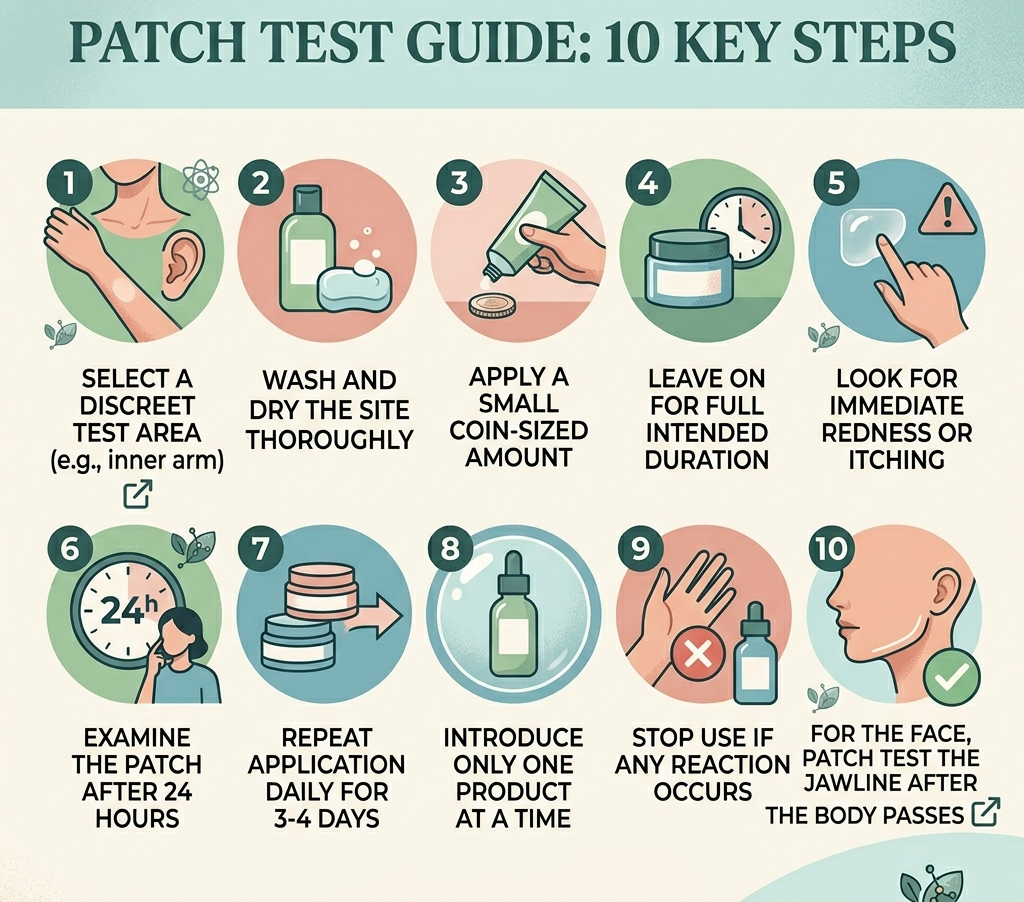
Following a systematic approach ensures you get an accurate reading from your skin without causing unnecessary discomfort. This reliable seven-step method is designed to help you safely evaluate any new skincare product before full-face application.
Tip: A successful patch test on your inner arm or neck does not perfectly replicate facial skin sensitivity, particularly around the delicate eye area or across an oily T-zone. Always proceed with caution during your first few full-face applications, using a slightly smaller amount of product than usual.
Taking this methodical approach gives your skin the necessary time to communicate its comfort level clearly.
How long should a patch test last?
Determining how long to patch test depends entirely on the type of product you are trying to introduce and the specific ingredients it contains. A single application is rarely enough to confirm compatibility because many modern cosmetic formulations cause delayed reactions that take several days to manifest.
Standard hydrating moisturisers, basic hyaluronic acid serums, and simple oil-free cleansers require a minimum testing window of three to four days. This timeframe is usually sufficient to rule out basic contact irritation from common emulsifiers or preservatives. However, potent active ingredients require a more extended evaluation period.
Formulas containing retinoids, alpha hydroxy acids, or high percentages of vitamin C should be tested for a full seven days. These active molecules alter cellular behavior and thin the outer layer of the skin, meaning irritation often peaks later in the week. Products featuring uncommon botanical alternatives, such as hydrolyzed rhodophyceae extract, polyglyceryl esters, or exotic fermented extracts, also warrant a seven-day test because your skin has less historical exposure data to rely on. Finally, heavy occlusive creams, face oils, and balms need a full week of testing to check for a comedogenic response. While an allergic reaction can appear in minutes, pore congestion and whiteheads typically take five to seven days to form beneath the surface.
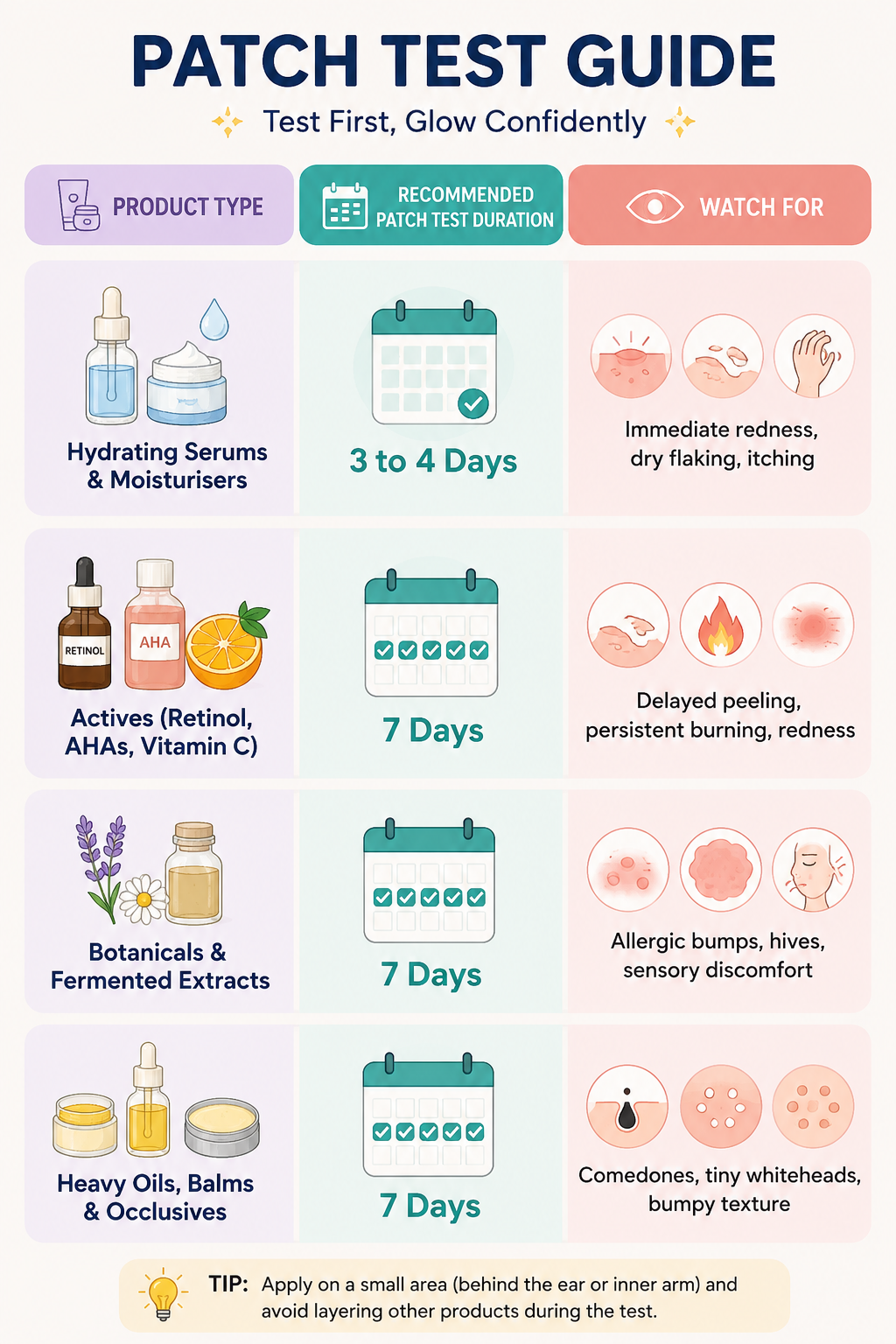
Structuring your testing timeline around these specific categories ensures you do not prematurely clear a product that could cause issues down the road.
What does a patch test reaction look like?
Recognising the precise visual and sensory signals of a reaction allows you to step in and protect your skin before severe damage occurs. An immediate reaction occurs within fifteen to thirty minutes of application and is characterized by sharp stinging, intense burning, distinct redness, or the formation of raised, itchy hives. If you experience these symptoms, you must wash the product off immediately with cool water and discontinue use entirely.
Delayed reactions are far more common and usually surface between twenty-four and seventy-two hours after application. These present as localized redness, rough dry flaking, persistent itching, or a dense cluster of tiny, red papules that feel sand-like to the touch. Sometimes, a product will cause sensory discomfort without leaving a visible mark. A mild tingling sensation that fades within two minutes is a normal response to low-pH exfoliating acids, but a deep, hot burning sensation that lingers is a clear sign of barrier distress.
It is equally important to identify what is not a true adverse reaction. The natural, earthy scent of an unfragranced raw material or a very temporary colour transfer from a safe cosmetic dye like CI 15985 should not be mistaken for skin irritation.
Furthermore, you must distinguish between a negative patch test reaction and the process of skin purging. Skin purging occurs when active ingredients increase cellular turnover, causing pre-existing microcomedones to rise to the surface all at once. Purging appears exclusively as small whiteheads or traditional pimples in areas where you normally experience congestion, and the process typically resolves within four to six weeks. A patch test reaction, by contrast, causes widespread irritation, dryness, and itching in areas where you do not normally break out, indicating that the formula is fundamentally incompatible with your skin. Learning to spot these differences helps you make informed choices about what stays in your bathroom cabinet.
Which ingredients are worth patch testing most carefully?
While any cosmetic chemical can theoretically cause an adverse response, a specific group of common ingredients is responsible for the vast majority of skin reactions. If you see these components listed near the top of an ingredient label, you should proceed with an elevated level of caution.
Synthetic fragrance and parfum remain the most prevalent cause of cosmetic allergic contact dermatitis. These complex chemical mixtures are added purely for sensory appeal but frequently trigger redness, itching, and long-term skin sensitisation in vulnerable individuals.
Natural essential oils, including isolated aromatic compounds like linalool, limonene, and citronellol, carry a similar risk profile. Though often marketed as soothing botanical benefits, these volatile oils oxidize upon exposure to air and can cause severe delayed contact allergies after weeks of seemingly trouble-free use.
Potent retinoids, such as retinol, retinal, and prescription tretinoin, are well-known triggers for irritant contact dermatitis. They accelerate skin cell shedding, which can temporarily compromise the lipid barrier and induce peeling, tightness, and redness if introduced too quickly.
Exfoliating alpha hydroxy acids, including glycolic acid and lactic acid, can cause immediate chemical irritation. High concentrations of these acids lower the skin's pH significantly, which can disrupt the protective acid mantle and lead to chemical burns or raw, weeping skin patches if your barrier is already weak.
Marine-derived ingredients, such as hydrolyzed rhodophyceae extract, provide exceptional film-forming hydration, but they deserve careful testing if you have highly reactive skin. Because this is a protein rich red algae extract, it contains complex organic structures that can occasionally trigger localized reactions in individuals with hypersensitive skin or shellfish-adjacent protein sensitivities.
Synthetic polyglyceryl emulsifiers are generally low-risk texturizers, but because they are less common in traditional drugstore formulas, they are well worth a standard patch test to rule out an unusual personal sensitivity.
Highly bioactive fermented ingredients, such as galactomyces and bifida ferment lysate, work wonders for the skin microbiome but can occasionally exacerbate underlying fungal conditions or trigger a rapid inflammatory response in sensitive complexions.
High-concentration niacinamide, particularly formulas containing ten percent or more of this vitamin, can cause immediate skin flushing. This occurs because an excess of niacinamide can trigger a transient dilation of blood vessels, leaving the skin looking blotchy and feeling uncomfortably hot.
Finally, heavy occlusive agents like lanolin and cocoa butter present a high risk for comedogenic acne rather than an allergic immune response. These rich lipids fill the pore structure efficiently, making them fantastic for cracked body skin but highly problematic for anyone prone to facial acne. Knowing which ingredients require the most oversight allows you to organize your testing routine efficiently.
Can you patch test multiple products at once?
Technically, you can patch test more than one product at the same time by utilizing different areas of your body, such as using your left inner arm for a new toner and your right inner arm for a new night cream. However, this approach introduces a significant logistical problem if your skin happens to react. If your immune system is triggered by an ingredient on one arm, it can become hyper-reactive, causing the other test site to look red and inflamed even if that second product is completely safe.
Unless you are under the direct supervision of a qualified dermatologist who can precisely read multi-site responses, the wisest strategy is to test one new product at a time. If you find yourself needing to overhaul an entire skincare routine after a severe reaction, always prioritize testing the lowest-risk products first. Establish a safe, basic moisturizing base before you attempt to patch test high-risk active treatments or complex serums. This structured approach ensures your skin barrier remains stable throughout the transition process.
Patch testing specific product types: Quick reference
Different product categories interact with your skin structure in unique ways, meaning your testing locations and application methods must adjust accordingly.
How to patch test a retinol or retinoid product
Retinoid formulas should always undergo a dedicated seven-day patch testing phase due to their high potential for barrier disruption. Instead of using your inner arm, apply a pea-sized amount to the lower corner of your jawline every other night during the test period. Facial skin is far more responsive to retinoid-induced peeling than body skin, so testing on the jaw ensures you get an accurate preview of how your face will tolerate the molecule. Keep the rest of your routine simple and deeply hydrating during this week.
How to patch test a facial oil or balm
Because facial oils and thick anhydrous balms are primarily tested to evaluate their pore-clogging potential, testing them on your arm will not yield helpful information. Apply a few drops of the product to a small, localized area of your cheek or the side of your chin for seven consecutive days. These areas feature a high density of sebaceous glands, allowing you to observe whether the lipids will trigger microcomedones, blackheads, or small texture bumps before you commit to applying the oil across your entire face.
How to patch test sunscreen
Sunscreen formulas frequently combine complex UV filters, chemical stabilisers, and texturizers that can trigger acute contact dermatitis. Begin by applying the sunscreen to your inner forearm for twenty-four hours to check for an immediate chemical allergy. If the skin remains clear, apply a normal amount to a small section of your face for three consecutive days. It is best to perform the initial application on a day when you plan to stay indoors, ensuring that any immediate redness is caused by the formula itself rather than raw sun exposure.
Frequently asked questions
Is a patch test the same as a skin allergy test?
No, these two tests serve entirely different purposes. A skincare patch test is a personal, at-home trial designed to check for superficial skin irritation or cosmetic compatibility over a few days. A professional skin allergy test, such as a scratch test or a clinical patch test panel, is performed by a qualified allergist or dermatologist using medical-grade compounds to diagnose specific, systemic immune system allergies.
What should I do if I have a patch test reaction?
If you experience an adverse reaction, wash the area immediately with cool water and a mild, soap-free cleanser to remove any residual product. Discontinue using the formula completely, apply a thin layer of pure petrolatum or a familiar barrier cream to soothe the irritation, and avoid exposing the area to direct sunlight. If the redness, swelling, or burning persists for more than a few days, seek professional medical advice.
Can I patch test on my face directly?
Yes, you can patch test directly on your face, provided you select a small, targeted area like the outer edge of your jawline or the side of your forehead. In fact, testing on the face is highly recommended for identifying acne cosmetic triggers and active ingredient irritation, as your facial skin is significantly thinner and more reactive than the skin on your arms or legs.
Do I need to patch test if a product says "dermatologist tested"?
Yes, you must still patch test products that carry a "dermatologist tested" or "hypoallergenic" claim on the label. These marketing terms mean the product was evaluated under clinical supervision, but they do not guarantee that the formula will be compatible with your unique skin profile. Every individual possesses a distinct skin chemistry, and even the gentlest formulas can contain a specific preservative or botanical extract that triggers a reaction in your skin.
Investing a few days into a proper patch testing routine might feel tedious when you are eager to try a new skincare purchase, but this simple habit saves your skin barrier from weeks of painful inflammation and costly repair. Cultivating this mindful approach to product introduction allows you to navigate the complex world of cosmetics with total confidence. If you want to make even smarter choices before your next purchase, you can use the data-driven tools at skinwis.com to research ingredient profiles and view specialized product comparison pages tailored specifically for sensitive skin types.