
What is the comedogenic rating of glyceryl oleate? (And 20 other common emollients)
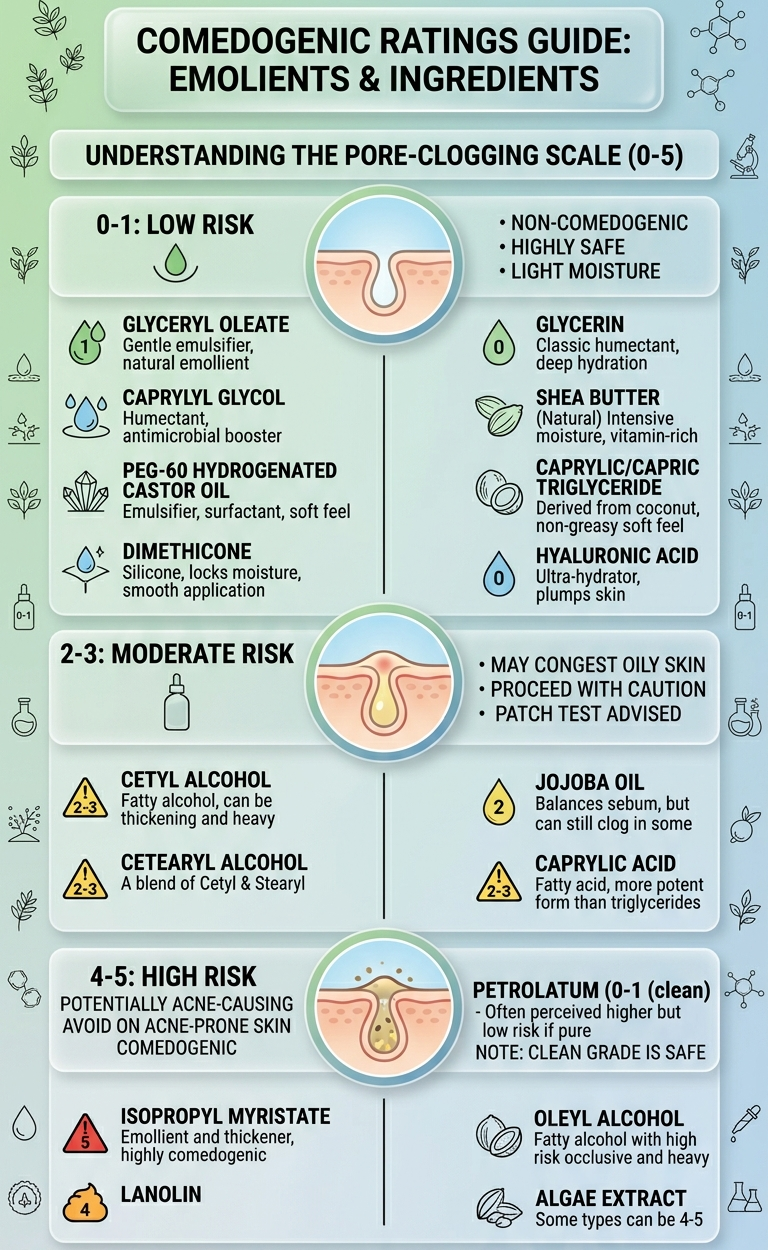
The glyceryl oleate comedogenic rating is 3, which means it has a very low probability of clogging your pores. A comedogenic rating is a standardised scale from 1 to 5 that measures how likely a skincare ingredient is to cause breakouts and blackheads. While many emollients have a reputation for triggering acne, this plant-derived ingredient is generally considered safe for most skin types. This article breaks down exactly how this ingredient behaves on your skin, reveals the pore-clogging potential of 20 other common cosmetic ingredients, and explains how to read product labels to avoid unexpected breakouts.
What does "comedogenic rating" actually mean?
The comedogenic scale is a tool used by product formulators and consumers to predict whether an ingredient will cause acne. The scale ranges from 1 to 5. A rating of 1 or 2 is considered low risk. Ratings between 3 and 5 indicate a moderate to high likelihood of causing blockages, meaning these ingredients are often risky for acne-prone individuals.
However, this system has significant real-world limitations. The data originally came from historical dermatological studies performed on rabbit ears, which are far more sensitive and reactive than human facial skin. Later testing on human backs improved accuracy, but neither method accounts for how ingredients behave when mixed together in a finished skincare formula. A ingredient rated 4 might be perfectly fine if used at a tiny fraction of a percent. Even so, looking at these numbers gives you a solid starting baseline when trying to isolate what might be causing your chronic breakouts. Understanding these numbers is your first line of defense when building a clear-skin routine.
Glyceryl oleate comedogenic rating: the full answer
With a glyceryl oleate comedogenic rating of 3, this ingredient is widely classified as moderate comedogenic. It is a fatty acid glycerol ester, typically created from glycerin and oleic acid, which mirrors the lipids naturally found in human skin. Because its structure is so similar to your skin's natural barrier, it integrates smoothly without pooling in the follicular openings.
In practice, this low rating makes it an excellent option for dry, sensitive, and mature skin types that require intensive moisture without the risk of blemishes. For oily and acne-prone skin, it is generally safe, though individuals with highly reactive skin should still monitor how they respond. Because oleic acid is a rich fatty acid, a pure application might feel heavy, but as an ingredient blended into a moisturiser, it rarely causes issues.
You will frequently find this ingredient in creamy facial cleansers, body washes, hair conditioners, and lightweight everyday moisturisers. It acts as both an emollient to soften the skin and an emulsifier to keep oil and water phases from separating. In cleansers, it helps replenish lost lipids so your skin does not feel stripped post-wash.
Concentration plays a massive role in whether an ingredient will actually cause a blemish. When it is used at the very bottom of an ingredient list, its actual concentration is usually below one percent, making its pore-clogging potential virtually zero. Even when used as a primary emollient higher up on the label, its low baseline rating means it is highly unlikely to trigger a breakout on its own.
The comedogenic ratings of 20 other common emollients
When navigating the beauty aisles, you will encounter dozens of different emollients, thickeners, and texture enhancers. Some of these are pure oils, others are synthetic silicones, and a few are actually cosmetic colorants or preservatives that exhibit emollient properties on the skin. To help you decode your skincare labels, the following list details 20 common ingredients, their established pore-clogging scores, and practical guidance for your specific skin type.
Caprylyl glycol has a rating of 1. This is a multitasking ingredient that works as an emollient and a preservative booster. It provides a smooth, hydrating feel without any risk of clogging pores, making it completely safe for all skin types, including severe acne sufferers.
PEG-60 hydrogenated castor oil has a rating of 2. This modified castor oil functions primarily as a solubiliser and emollient. Because of the chemical ethoxylation process, it loses the heavy, sticky nature of raw castor oil, rendering it completely non-comedogenic and safe for acne-prone skin.
CI 15985 has a rating of 2. Also known as Sunset Yellow FCF, this is a synthetic pigment used to give products a pleasant golden hue. While some cosmetic colorants can be highly comedogenic, this specific dye carries low pore-clogging risk, though highly sensitive skin types should monitor it for potential redness.
Isopropyl myristate has a rating of 5. This synthetic oil is highly effective at reducing the greasy feel of heavy creams, but it is one of the most notorious pore-cloggers in cosmetics. Anyone with oily or acne-prone skin should strictly avoid products containing this ingredient near the top of the list.
Cetyl alcohol has a rating of 2. This is a fatty alcohol used to thicken lotions and creams. It is generally well-tolerated by dry and normal skin types, but individuals who are highly prone to stubborn whiteheads may find that it aggravates their condition.
Stearyl alcohol has a rating of 2. Like its sibling cetyl alcohol, this fatty alcohol alters the texture of skincare products. It presents a low-to-moderate risk for acne-prone skin, meaning it is usually fine in rinse-off products but might cause issues in thick, leave-on overnight masks.
Glyceryl stearate has a rating of 3. This is a solid, waxy emollient that helps bind water and oil together. Despite its rich texture, it does have moderate comedogenic risk, making it a brilliant moisturizing choice for individuals who want a creamy product without the fear of breakouts.
Dimethicone has a rating of 1. This classic silicone forms a breathable barrier over the skin to prevent water loss. It is incredibly safe for acne-prone skin, though it can sometimes trap other underlying, pore-clogging ingredients beneath its seal if the skin is not cleansed properly.
Squalane has a rating of 1. This is a stable, saturated version of squalene, a lipid that your skin naturally produces. It is a highly compatible, lightweight oil that provides superb moisturisation without triggering acne, making it a holy grail for dehydrated, breakout-prone skin.
Caprylic/capric triglyceride has a rating of 1. Derived from coconut oil and glycerin, this ingredient offers the silkiness of an oil without the intense greasiness. Most people use it without any issues, but those with exceptionally sensitive, acne-prone skin might notice minor congestion.
Shea butter has a rating of 1. Despite its thick, luxurious texture, pure shea butter is remarkably non-comedogenic for the vast majority of people. It is packed with beneficial fatty acids and vitamins, making it a stellar option for dry skin, though the heavy texture can still feel overwhelming on very oily complexions.
Jojoba oil has a rating of 2. This liquid wax closely resembles human sebum. It can trick the skin into producing less oil, which helps some acne sufferers, but its moderate rating means a small percentage of individuals may still experience mild clogging.
Mineral oil has a rating of 1. Cosmetic-grade mineral oil is highly refined and completely non-comedogenic. It sits on top of the skin to lock in moisture rather than sinking into the pores, though its occlusive nature can feel heavy and greasy on oily skin types.
Lanolin has a rating of 3. Extracted from sheep's wool, this deeply nourishing emollient is fantastic for chapped, cracked skin. However, its high molecular weight and composition make it highly comedogenic, so it should be kept far away from acne-prone areas of the face.
Cocoa butter has a rating of 4. This natural butter is incredibly high in fatty acids, making it a savior for severely dry body skin and stretch marks. Because of its high pore-clogging score, using it on the face is highly likely to result in breakouts for anyone prone to acne.
Petrolatum has a rating of 1. Better known as petroleum jelly, this is the most effective occlusive ingredient available. It is completely non-comedogenic because its molecules are too large to actually enter the pore, making it safe for slugging, provided your skin is clean underneath.
Oleyl alcohol has a rating of 4. Unlike the safer fatty alcohols, this unsaturated fatty alcohol has a high tendency to irritate the follicular lining and cause blackheads. It is best avoided by anyone struggling with persistent congestion or oily skin.
Sodium hyaluronate has a rating of 1. The salt form of hyaluronic acid is a powerful humectant rather than a traditional oil-based emollient. It floods the skin with water-based hydration, presenting absolutely zero risk of clogging pores for any skin type.
Niacinamide has a rating of 1. This popular form of vitamin B3 is a water-soluble active that actually helps regulate sebum production and calm inflammation. It has no pore-clogging capabilities whatsoever and is actively beneficial for managing acne.
Allantoin has a rating of 1. This soothing, anti-irritant ingredient helps heal the skin and stimulate tissue growth. It provides zero comedogenic risk and is frequently included in acne treatments to help calm the redness and irritation associated with breakouts.
When looking closely at these descriptions, a clear pattern emerges regarding how different ingredient categories behave. Synthetic silicones, water-binding humectants, and highly refined mineral oils almost always score a 1 or 2, making them universally safe for congested skin. Conversely, natural plant butters and specific animal-derived lipids often carry much higher scores, requiring extra caution when designing a routine.
How to read an ingredient list for comedogenic risk
Learning to scan a cosmetic ingredient label is a crucial skill if you want to protect your skin from unwanted blemishes. The most important rule to remember is that ingredients are always listed in descending order of concentration. The first five to seven ingredients usually make up around 80 to 90 percent of the entire formula. If a highly comedogenic ingredient, like isopropyl myristate, sits at the very top of that list, the product is highly likely to cause breakouts. If that same ingredient is listed at the very bottom, beneath the preservatives and fragrances, its real-world risk is drastically minimized.
You must also consider how ingredients interact when they are formulated together. A single product that combines three or four different mid-rated ingredients, like cetyl alcohol, jojoba oil, and caprylic/capric triglyceride, can sometimes create a cumulative pore-clogging effect that a single ingredient would not cause on its own.
Because everyone's sebum composition and pore structure are unique, individual skin responses will always vary. This is why targeted patch testing remains the true gold standard for skincare safety. To patch test correctly, apply a small amount of the new product to a specific, breakout-prone area of your face, such as the jawline, for five to seven consecutive days to see if any congestion develops.
Tip: Never rely solely on a "non-comedogenic" label on the front of a bottle, as this marketing term is not strictly regulated by law. Always flip the bottle over and read the actual ingredient list yourself.
Once you feel confident reading labels, you can begin comparing how different brands formulate their products to find the cleanest options. For instance, comparing a popular moisturiser like the CeraVe Moisturising Cream against its competitors can reveal why one might cause breakouts for you while another does not. You can investigate this further by checking the CeraVe Moisturising Cream to evaluate its ingredient safety profile.
Which emollients are safest for acne-prone skin?
If your skin is highly susceptible to blackheads, whiteheads, and cystic acne, you should actively steer your routine toward the safest, lowest-rated emollients available. Choosing ingredients with a verified score of 1 or 2 allows you to thoroughly hydrate your skin barrier without feeding the bacteria that cause acne.
Silicones like dimethicone are exceptional choices for acne-prone individuals because they provide a smooth, velvety finish while remaining completely non-comedogenic. Squalane is another phenomenal option for those who prefer the feel of a traditional face oil, as its lightweight, non-greasy structure provides pure lipid replenishment without blocking the pore channel. For general lotions, look for formulas built around caprylic/capric triglyceride, which delivers excellent softening properties without the heavy risk associated with pure coconut oil. Additionally, incorporating water-rich humectants like sodium hyaluronate ensures your skin stays plump and hydrated, preventing the dehydration that can sometimes cause your skin to overproduce its own sebum.
Finding products that balance these safe emollients perfectly can be challenging when shopping online. Utilizing data-driven comparison tools can save you a lot of trial and error. By looking at a highly rated fluid moisturiser, such as the La Roche-Posay Toleriane Sensitive Fluid , you can see how a minimal ingredient list benefits reactive skin. Reviewing the La Roche-Posay Toleriane Sensitive Fluid will show you exactly how to spot a cleanly formulated, low-risk product layout.
Frequently asked questions
Is glyceryl oleate the same as propylene glycol?
No, these two ingredients are completely different. Glyceryl oleate is a natural fatty acid ester used primarily as a nourishing emollient and emulsifier to soften the skin. Propylene glycol is a synthetic small-molecule alcohol that functions as a humectant and penetration enhancer to help other ingredients absorb better. They share no chemical structural similarities, though both happen to carry a very safe, low comedogenic rating.
Can a comedogenic ingredient still be in a non-comedogenic product?
Yes, a product labeled non-comedogenic can absolutely contain ingredients that score highly on the comedogenic scale. If a high-rated ingredient is used at a very low concentration, or if the overall formula is diluted beautifully with water and light silicones, the final product may not clog pores at all. The overall formulation design, concentration levels, and processing methods dictate the final product behavior.
What is the most comedogenic common skincare ingredient?
Isopropyl myristate and its chemical relatives, such as isopropyl palmitate, are widely considered some of the most highly comedogenic ingredients commonly used in cosmetics. They score a maximum 5 on the scale. These synthetic esters are excellent at giving creams a slick, dry-touch application feel, but they are incredibly efficient at inducing rapid follicular plugging in acne-prone individuals.
Is caprylyl glycol safe for acne-prone skin?
Yes, caprylyl glycol is entirely safe for acne-prone skin. It carries a comedogenic rating of 2, meaning it has very low physical capacity to clog pores or trigger breakouts. It is a lightweight, multi-functional ingredient that provides mild emollient benefits while helping to preserve the product, making it an excellent component in formulas designed for sensitive or blemish-prone skin types.
Understanding how different emollients interact with your pores is the easiest way to prevent frustrating cosmetic-induced breakouts. While glyceryl oleate is moderatly safe with its low rating of 3, keeping a watchful eye on other high-risk ingredients in your routine will help keep your skin clear and balanced. To take the guesswork out of your next shopping trip, you can use the skinwis.com ingredient analysis and comparison tools to instantly evaluate any skincare product before you buy it.