Understanding Skincare Actives: A Comprehensive Guide for Beginners
Introduction
Skincare actives are the powerhouse ingredients in skincare products that directly address specific skin concerns. For someone new to skincare, understanding what actives are, how they work, and how to use them effectively can transform a skincare routine from guesswork to a science-backed regimen. This report breaks down the concept of skincare actives in accessible terms, explains their biological mechanisms, categorizes common actives by benefit, and provides practical guidance on safe usage and product selection. The goal is to empower beginners with the knowledge to confidently incorporate actives into their skincare routines for visible, lasting results.
What Are Skincare Actives?
Skincare actives are ingredients specifically included in formulations to target and treat particular skin concerns. These concerns range from aging signs like wrinkles and fine lines to acne, hyperpigmentation (dark spots), and hydration deficits. Unlike inactive ingredients—such as preservatives, stabilizers, or texture enhancers—actives are biologically active compounds that interact directly with skin cells, enzymes, or proteins to produce measurable effects.
Actives are considered the "workhorse" components of skincare products because they deliver the primary benefits promised by the product. They are included in formulations at concentrations high enough to ensure efficacy, and their effects are supported by scientific research and dermatological studies. This evidence-based approach distinguishes actives from other ingredients that merely support the product's texture, stability, or sensory appeal.
For example, while a moisturizer may contain inactive ingredients that make it feel smooth and pleasant on the skin, the active ingredients are the ones that actually hydrate, repair the skin barrier, or stimulate collagen production. This distinction is crucial for consumers to understand because it highlights why certain products work better than others for specific skin issues.
How Do Skincare Actives Work?
At a basic biological level, skincare actives work by interacting with the skin's cellular processes. They penetrate the skin's layers and influence biological pathways to produce desired effects such as:
The effectiveness of actives depends on their concentration, the product's pH, and how well they penetrate the skin. For instance, AHAs and BHAs require a low pH to work optimally, while some actives like vitamin C degrade at high pH levels. The skin's physiology and the formulation's design ensure that actives reach their target cells to exert their effects without causing harm.
Analogies can help clarify these mechanisms: think of actives as "messengers" that tell skin cells to behave in certain ways (e.g., produce more collagen or slow down melanin production), or as "boosters" that enhance the skin's natural processes (like hydration or exfoliation).
Categorization of Common Skincare Actives by Benefit
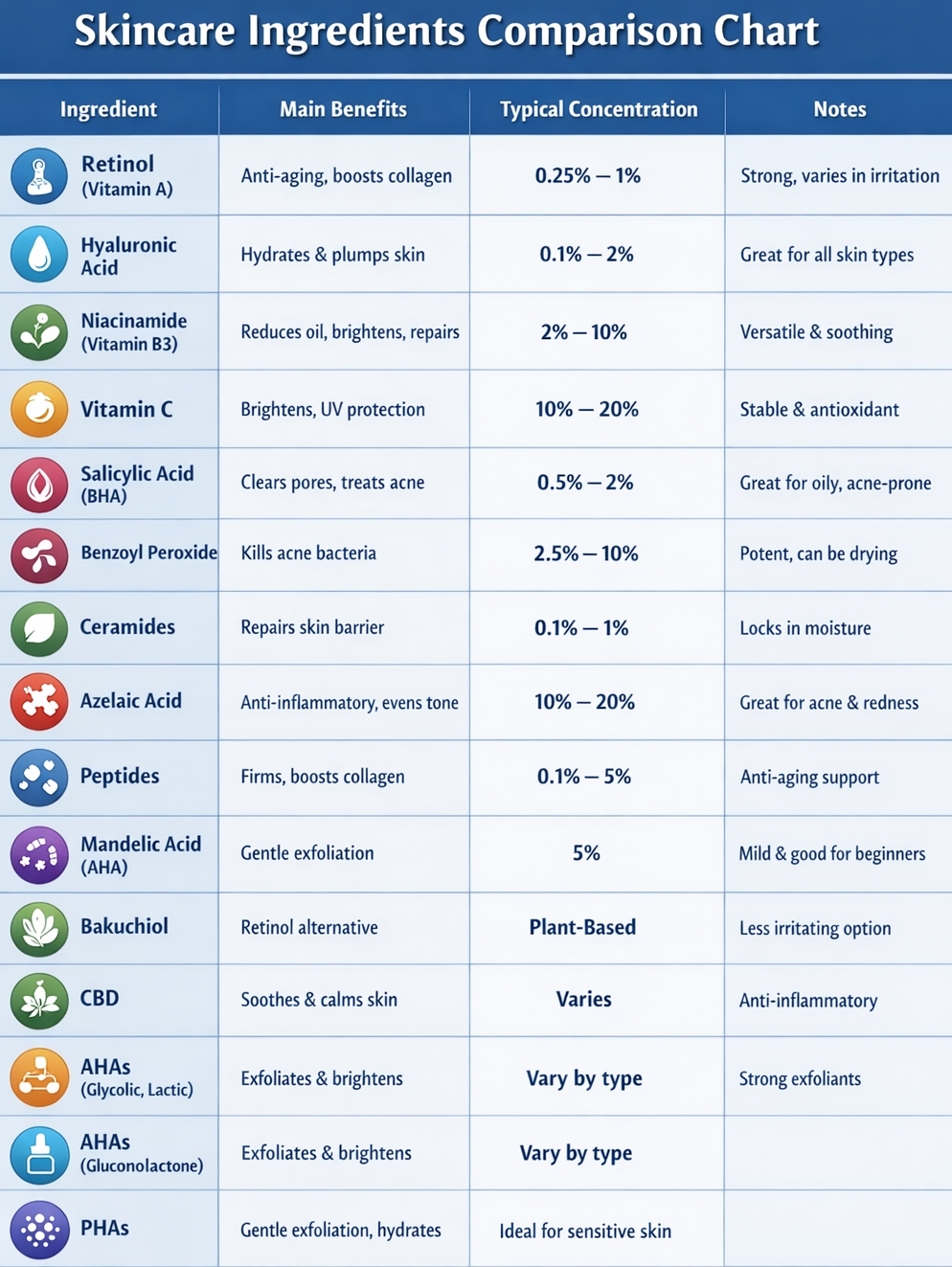
Below is a table summarizing common skincare actives, their primary benefits, how they work, and typical concentration ranges found in over-the-counter products:
Retinol (Vitamin A)
Retinol is a popular anti-aging ingredient mainly used to target wrinkles and fine lines. It works by speeding up skin cell turnover and boosting collagen production, which helps skin look smoother and firmer over time. You’ll usually find it in concentrations between 0.25% and 1%. It belongs to the broader retinoid family (including retinal, adapalene, and retinyl retinoate), which vary in strength and irritation—stronger forms work faster but can be more irritating, especially for beginners.
Hyaluronic Acid
Hyaluronic acid is all about hydration and is ideal for dry or dehydrated skin. It works by attracting and holding water in the skin, helping it look plump and smooth. Typical concentrations range from 0.1% to 2%. It’s very gentle and widely tolerated, making it a staple for almost every skin type.
Niacinamide (Vitamin B3)
Niacinamide is a multi-tasking ingredient that helps with acne, hyperpigmentation, and early signs of aging. It reduces inflammation, controls oil production, and strengthens the skin barrier. You’ll usually see it in concentrations from 2% to 10%. It’s a versatile ingredient (also known as nicotinamide) and works well for conditions like acne, rosacea, and uneven skin tone.
Vitamin C (L-Ascorbic Acid)
Vitamin C is widely used for brightening, anti-aging, and protecting the skin from environmental damage like UV exposure. It works by neutralizing free radicals, boosting collagen, and evening out skin tone. Effective concentrations typically range from 10% to 20%. There are also more stable derivatives (like sodium ascorbyl phosphate or tetrahexyldecyl ascorbate), which are gentler but may work more slowly.
Salicylic Acid (BHA)
Salicylic acid is a go-to ingredient for acne and blackheads. It penetrates deep into pores to exfoliate from within and reduce inflammation. It’s commonly used in concentrations between 0.5% and 2%. Gentler versions like betaine salicylate are also available, making it suitable even for more sensitive skin types.
Benzoyl Peroxide
Benzoyl peroxide is a powerful acne treatment that works by killing acne-causing bacteria and helping control excess oil. It’s typically used in concentrations from 2.5% to 10%. While very effective, it can be drying or irritating, so it’s often introduced slowly into a routine.
Ceramides
Ceramides are essential for hydration and repairing the skin barrier. They work by reinforcing the skin’s natural lipid layer, helping to lock in moisture and protect against external irritants. You’ll usually find them in concentrations between 0.1% and 1%. They’re especially beneficial for dry, sensitive, or compromised skin.
Azelaic Acid
Azelaic acid is a versatile ingredient that helps with acne, rosacea, and hyperpigmentation. It works by reducing inflammation, fighting bacteria, and slowing down melanin production. Typical concentrations range from 10% to 20%. Derivatives like potassium azeloyl diglycinate offer similar benefits with a gentler feel on the skin.
Peptides
Peptides are used mainly for anti-aging and skin repair. They signal the skin to produce more collagen and elastin, helping improve firmness and elasticity. They’re usually included in formulas at 0.1% to 5%. They’re generally gentle and work well as part of a long-term skincare routine.
Mandelic Acid (AHA)
Mandelic acid is a gentle exfoliating acid, ideal for improving skin texture and treating hyperpigmentation. It works by removing dead skin cells and helping regulate melanin production. It’s often used at around 5%. As part of the AHA family (which includes glycolic and lactic acid), it’s known for being milder and better suited for sensitive skin.
Bakuchiol
Bakuchiol is a plant-derived alternative to retinoids that offers similar anti-aging benefits, like improving skin texture and reducing fine lines, but with less irritation. It’s a good option for those who can’t tolerate traditional retinoids.
CBD (Cannabidiol)
CBD is mainly used for its soothing and anti-inflammatory properties. It helps calm irritated skin and support overall skin balance, making it useful for sensitive or reactive skin types.
AHAs (Alpha Hydroxy Acids)
AHAs like glycolic, lactic, and mandelic acid are used for exfoliation and brightening. They work by removing dead skin cells from the surface, improving texture and tone. Their strength varies depending on the specific acid, glycolic is stronger, while mandelic is gentler.
PHAs (Polyhydroxy Acids)
PHAs, such as gluconolactone and lactobionic acid, provide gentle exfoliation while also hydrating the skin. They’re ideal for sensitive skin because they work more slowly and are less irritating than AHAs.
Thiamidol
Thiamidol(Isobutylamido Thiazolyl Resorcinol) is a targeted brightening ingredient that reduces hyperpigmentation by inhibiting the enzyme responsible for melanin production (tyrosinase). It’s often used in products designed to treat dark spots.
Alpha-Arbutin
Alpha-arbutin is another brightening ingredient that helps fade dark spots and even out skin tone by reducing melanin production. It’s known for being stable and effective, especially for hyperpigmentation concerns.
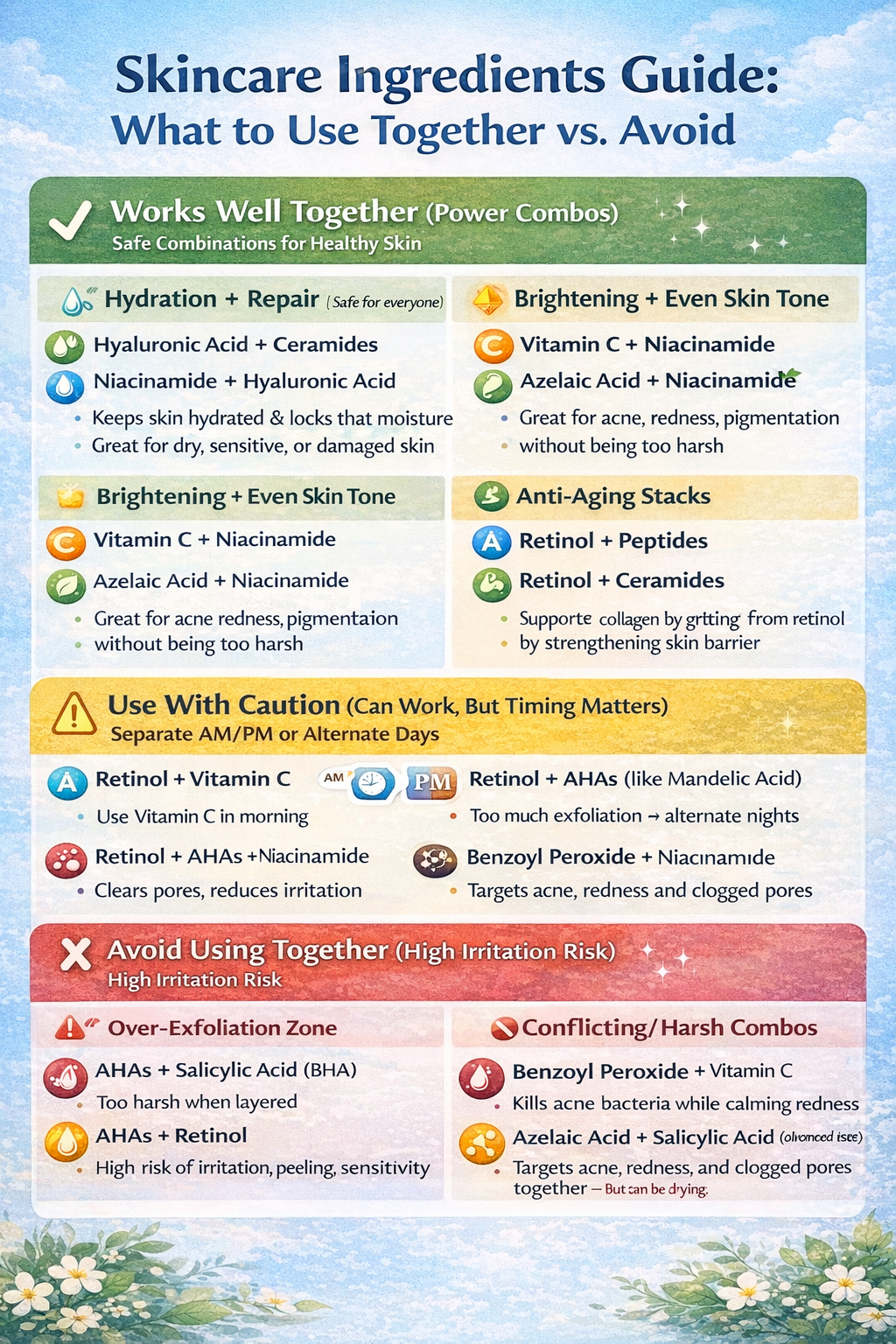
What Works Well Together